The Night Winter Slowed Down — and the Dark Beer Took Over
Outside, the air cuts sharp like cracked ice. Inside, a single glass glows against the wooden table — a stout so dark it swallows the lantern light around it. Steam rises from a cast-iron pot in the corner. Somewhere, a door closes, snow shakes loose, and the room exhales the quiet warmth of people who understand that winter isn’t meant to be endured. It’s meant to be paired.
Winter is the season where comfort food meets its truest ally: dark beer. Not just because malt sweetness warms the edges of a cold evening, but because these beers amplify flavor the way a dimmer dial sharpens shadow and shape. Roast, caramel, cocoa, bourbon heat — each note feels engineered for cold nights and slow meals.
And yet, pairing dark beer with winter dishes is both art and algorithm. It’s instinct, but also chemistry. The right combination elevates a dish; the wrong one buries it. In 2025, with brewers pushing boundaries and modern palates craving deeper, richer experiences, understanding these pairings becomes a skill worth mastering.
This winter beer pairings 2025 guide takes you through the science, the flavor map, the mistakes to avoid, and the 10 pairings that define winter 2025. No fluff. No guesswork. Zero mistakes.
Why Winter Belongs to Dark Beer
Winter slows everything down — fermentation, metabolism, even the way flavor travels across the palate. And that shift is exactly why dark beers come alive the moment temperatures drop. Their depth, warmth, and density resonate differently in cold air, turning simple meals into layered experiences.
The Flavor Logic of Cold Weather
Cold temperatures mute flavor. That’s sensory science. When the air dips below freezing, your palate asks for intensity — more roast, more caramel, more body. Dark beers respond with exactly that. Their malt richness compensates for the winter slowdown, creating a fuller perception of taste compared to lighter styles.
Think of it as thermal pairing: warm dishes need beers with enough weight to stand beside them. A stout next to braised beef, a dunkel beside schnitzel, a porter with beef stew. Cold weather doesn’t call for subtlety. It calls for resonance.
The Tech Behind the Taste
Behind every dark beer lies a map of compounds such as melanoidins and roast compounds, chocolate and coffee aromatics, caramelized sugars, bittering polyphenols. These molecules behave differently depending on temperature, and winter gives them room to bloom.
Brewers increasingly use data tools — fermentation curve models, roast intensity profiles, even ester prediction algorithms — to fine-tune flavor. What used to be trial and error is now part sensory craft, part digital signal processing. In beer, data is the new intuition.
The Rise of Modern Dark Styles in 2025
The dark beer world is evolving fast. Pastry stouts have moved beyond sugar bombs; today’s versions highlight balance and structure. Porters, once overshadowed by IPAs, are returning in cleaner, roast-forward forms. And lager breweries are embracing dunkel and schwarzbier as winter showcases.
Even non-alcoholic brewers are pioneering new extraction techniques, using vacuum brewing and rapid-cooling systems to retain the chocolate and roast notes that often disappear in NA styles. The result: dark beers that feel genuinely modern — part tradition, part tomorrow.
The Core Styles You Must Know This Winter
Winter is a season that rewards depth. The beers below form the backbone of cold-weather drinking — each with its own sensory architecture, pairing strengths, and culinary personality. Master these, and you master the entire winter table.
Stout (From Dry to Pastry)
Stouts offer the widest spectrum in the dark beer universe, as outlined in the official stout style guidelines in the dark beer universe: dry Irish stouts with clean roast and gentle bitterness; milk stouts with soft sweetness; imperial and pastry stouts carrying chocolate, vanilla, or barrel notes. Their structure — roast, body, residual sweetness — makes them perfect for rich winter dishes, especially braised meats and desserts.
Porter (Classic, Robust, Modern)
Porters bring a softer roast profile than stouts, leaning into cocoa, toffee, and subtle espresso. The modern revival focuses on clarity: fewer adjuncts, more clean malt expression. Ideal for stews, roasted vegetables, and dishes where caramelized flavors need amplification rather than domination.
Dunkel & Schwarzbier
Lager smoothness with dark beer depth. Dunkel offers bread crust, light caramel, and a round sweetness; schwarzbier brings gentle roast and a crisp finish. Both shine with fried foods, schnitzel, roasted chicken, and any winter dish where balance is more important than intensity.
Belgian Dark Strong Ale
Complex, fruity, warming. Expect plum, fig, raisin, clove, pepper, and a warm alcohol glow. See more about Belgian strong ales directly from the Belgian Brewers Federation. The high ester profile makes it a natural match for blue cheese, cured meats, and heavily spiced dishes. It’s winter in a glass — intense, contemplative, deeply layered.
Winter Warmers & Spiced Ales
Built for the season, these beers integrate caramel malts with cinnamon, nutmeg, ginger, or orange peel. When used thoughtfully, spices elevate both sweet and savory pairings. Best alongside gingerbread, glazed ham, or anything that benefits from a gentle holiday resonance.
Barrel-Aged Variants (Bourbon, Rum, Cognac)
Barrel aging adds layers of vanilla, oak, coconut, dark fruit, and warmth. Bourbon barrels deliver caramel and char; rum barrels introduce molasses sweetness; cognac barrels weave in dried fruit and tannin. These beers demand bold pairings: slow-cooked short ribs, smoked dishes, rich desserts, or blue-veined cheeses.
Zero Mistakes Pairing Matrix (2025 Edition)
Great pairings don’t happen by accident. They follow patterns — heat meeting sweetness, fat meeting roast, spice meeting esters. Think of this section as your winter algorithm: a matrix that eliminates guesswork and guarantees harmony between plate and glass.
Fat → Dark Malt
Rich dishes need a beer with structure. The caramelized textures driven by the Maillard reaction and roast in stouts and porters cut through fatty textures the way acidity works in wine. From short ribs to creamy gratins, darker malt refreshes the palate and sharpens flavor.
Smoke → Roast
When a dish has smoky notes — grilled meats, charred vegetables, smoked ham — pairing it with a roasted-malt beer creates a seamless bridge. The result is depth, not heaviness. Rauchbier, porter, and dry stout excel here.
Sweetness → Barrel Heat
Desserts or sweet glazes pair best with barrel-aged beers. Bourbon barrels add vanilla and caramel; rum barrels add molasses warmth. These flavors amplify sweetness while the alcohol heat adds contrast, preventing sugar overload.
Spice → Esters
Dishes with cloves, cinnamon, ginger, or cardamom pair beautifully with Belgian dark strong ales and winter warmers. Their fruity, spicy esters wrap around aromatic spices and intensify them without overwhelming the dish.
Chili → Chocolate Malt
Capsaicin’s burn meets its match in chocolate malt. Imperial stouts and robust porters soften spice, creating a rounded heat that feels warm rather than sharp. This pairing turns chili dishes into layered sensory experiences.
Salt → Caramel Malt
Salt brightens caramel malt, creating a sweet-salty contrast similar to salted caramel desserts. Schwarzbier, dunkel, and brown ales are perfect matches for salty fried foods and roasted poultry.
The 10 Essential Winter Pairings of 2025
Winter food is slow, rich, and layered — built from caramelization, reduction, spice, smoke, and fat. Dark beers respond with equal depth, creating pairings that feel engineered for cold-weather comfort. These ten combinations define winter 2025: bold, warm, and perfectly aligned.
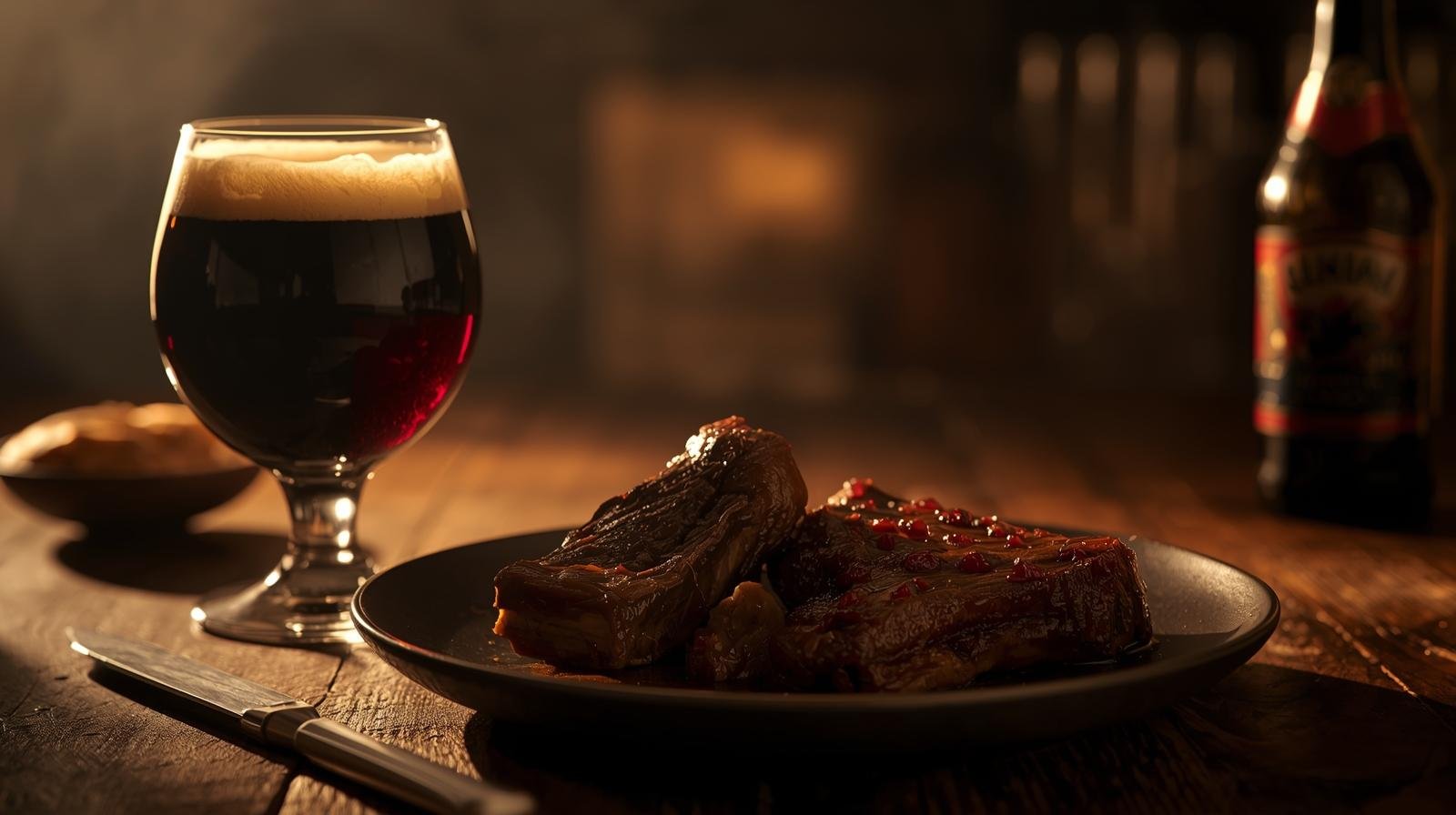
1. Bourbon Barrel Stout + Slow-Cooked Beef Short Ribs
The king of winter pairings. Short ribs bring the umami-rich depth of braises and caramelized edges. A bourbon barrel stout answers with vanilla, oak, char, and dark chocolate heat. Bitterness cuts the fat; residual sweetness echoes the glaze. This pairing feels like firelight made edible.
2. Dry Irish Stout + Oysters Rockefeller
The classic stout and oyster pairing gets a winter upgrade. The buttery spinach and Parmesan crust contrasts beautifully with a dry stout’s clean bitterness. Minerality in the oysters sharpens the roast notes, creating a pairing that’s simultaneously delicate and intense — a neon-bright signal in a dark season.
3. Robust Porter + Classic Beef Stew
Beef stew is all about fond: the browned bits that become the sauce’s DNA. A robust porter mirrors those caramel and cocoa notes while carbonation lifts the stew’s richness. Herbs like thyme and bay leaf pull out subtle hop bitterness, transforming a familiar dish into a colder-weather power duo.
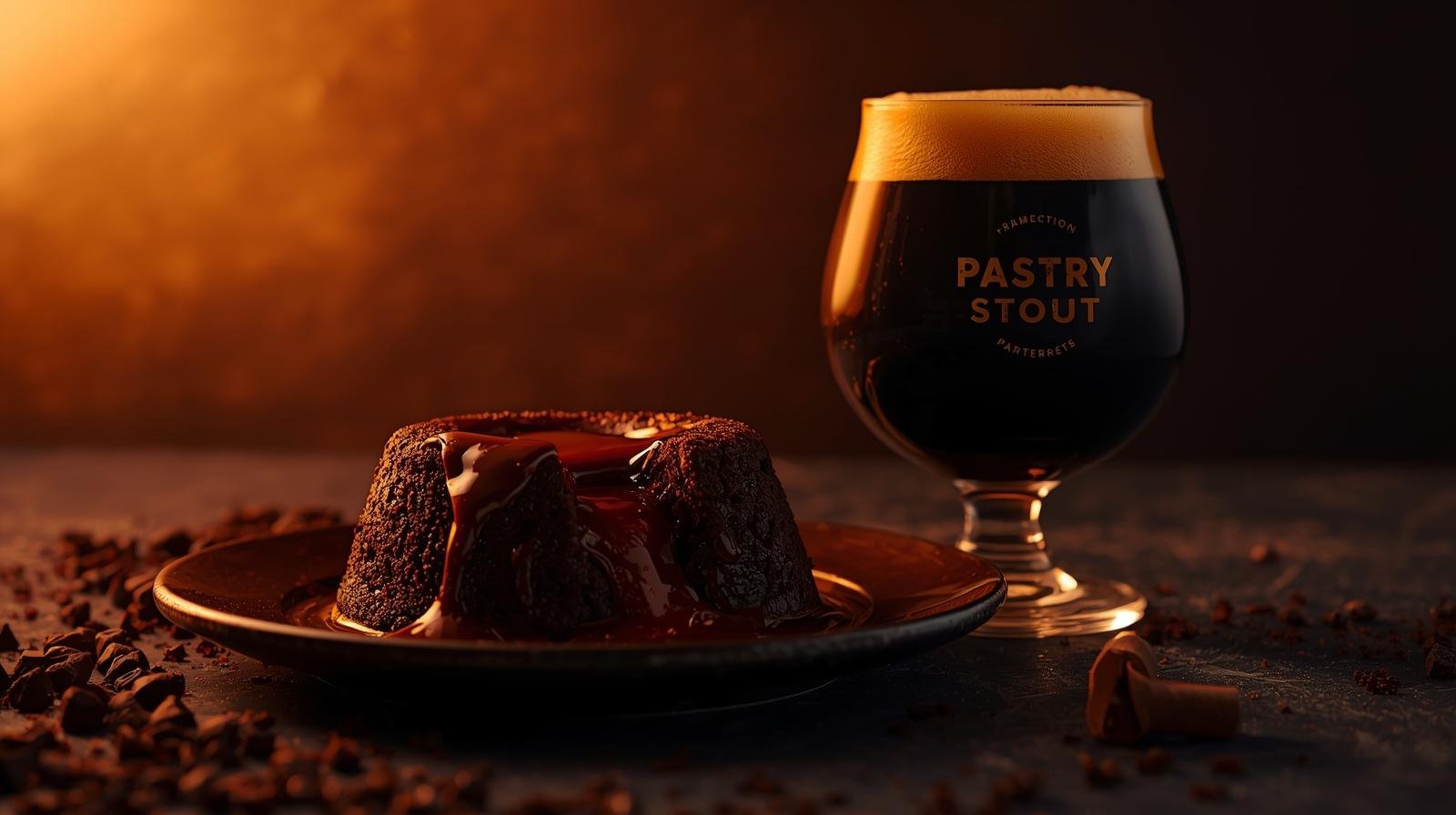
4. Pastry Stout + Dark Chocolate Lava Cake
Intensity meets intensity — but with precision. A well-made pastry stout isn’t cloying; it’s structured. Vanilla, chocolate malt, and silky body wrap around the molten center of a lava cake. The secret is contrast: the beer’s roast bitterness prevents sugar overload, turning sweetness into architecture instead of excess.
5. Dunkel + Schnitzel or Crispy Chicken Cutlets
Dunkel is one of winter’s most underrated champions. Its toasted bread-crust flavor pairs brilliantly with anything fried. The beer’s gentle sweetness counterbalances salt, while its smooth lager body refreshes after each bite. Schnitzel and dunkel feel engineered for each other — crisp meeting calm.
6. Belgian Dark Strong Ale + Blue Cheese
This pairing is sheer electricity. The ale’s plums, figs, cloves, and esters collide with the sharp, salty punch of blue cheese, creating a resonance that’s both wild and harmonious. Alcohol warmth softens the cheese; the cheese amplifies the fruitiness. It’s a winter pairing that feels almost symphonic.
7. Rauchbier + Mac & Cheese
Smoke + cream = winter perfection. Rauchbier’s bacon-like smokiness threads through the richness of a baked mac and cheese, cutting through fat while deepening flavor. The interplay between gooey cheese and smoked malt creates a pairing that feels indulgent, comforting, and surprisingly refined.
8. Imperial Stout + Chili Con Carne
Chili calls for a beer with weight — and an imperial stout rises to the challenge. Chocolate malt tames capsaicin’s heat, turning the burn into a slow, satisfying warmth. Meanwhile, the stout’s body enhances the chili’s depth, making each bite feel fuller and rounder.
9. Schwarzbier + Roast Chicken
Light on body, dark in flavor. Schwarzbier is one of the rare beers that brings roast complexity without heaviness. With roast chicken, its caramel and coffee notes elevate the crispy skin, while its clean lager finish keeps the pairing refreshing.
10. Winter Warmer + Gingerbread or Spiced Desserts
Winter warmers shine with gingerbread, cinnamon cookies, and holiday cakes. The spices intertwine — ginger with ginger, cinnamon with clove, caramel malt with brown sugar. The result is not sweetness alone, but warmth: a glowing, holiday-bright pairing that feels both nostalgic and modern.
Winter Pairing Mistakes to Avoid (Zero Exceptions)
Winter pairings thrive on balance — not brute force. Even the richest dishes and darkest beers can clash when the underlying chemistry is off. These are the mistakes that break a winter meal’s rhythm. Avoid them, and you’re already 90% of the way to mastery.
Mistake #1: Pairing Sweet with Sweet Without Contrast
Lava cake + pastry stout works because of bitterness, not sugar. Without contrast, sweet-on-sweet becomes syrupy chaos. Look for roasted malt, barrel heat, or carbonation instead of adding more sweetness. Always anchor dessert pairings in structure.
Mistake #2: Using IPA for Comfort Food Dishes
IPAs dominate in summer — but in winter, they bulldoze subtle flavors. Citrusy hop bitterness clashes with gravy-rich dishes, braises, cream sauces, and anything roasted. Save IPAs for spicy snacks; keep them away from heavy winter meals.
Mistake #3: Serving Dark Beer Too Cold or Too Warm
Temperature is architecture. Too cold, and dark beer loses aroma; too warm, and alcohol dominates. Aim for 10–13°C for stouts and porters, 7–9°C for dunkel and schwarzbier. A small shift in temperature changes the entire pairing dynamic.
Mistake #4: Ignoring Carbonation as a Food Tool
Dark beers with higher carbonation — porter, schwarzbier, Belgian dark ales — excel with rich dishes because bubbles cut fat. When a meal is dense or creamy, choose a beer with enough lift to reset the palate. It’s culinary physics.
Mistake #5: Pairing Barrel-Aged Beers with Delicate Foods
A bourbon barrel stout overwhelms roast chicken, mild cheeses, and any dish built on nuance. Barrel-aged beers demand boldness: smoked meats, heavy braises, strong cheeses. When in doubt, ask yourself: “Is this dish loud enough for the beer?”
The Modern Winter Beer Cellar (What to Stock in 2025)
A winter beer cellar isn’t just storage — it’s strategy. The right mix of dark beers shapes your cold-season meals, elevates pairings, and gives you options for spontaneous gatherings or slow nights at home. Think of your cellar as a curated spectrum: roast, caramel, spice, barrel, and balance.
Start with foundational styles: a dry stout for lighter dishes, a robust porter for stews and roasted vegetables, and a dunkel or schwarzbier for nights when balance matters more than intensity. These beers cover most day-to-day winter meals without overpowering them.
Add two or three high-impact bottles: an imperial stout, a barrel-aged variant, or a Belgian dark strong ale. These beers turn dinners into events. They shine with braises, blue cheeses, smoked dishes, and rich desserts. Store them upright in a cool place following recommended cellaring guidelines and serve them warmer than you think.
Finally, embrace modern tools. Apps like Untappd, CellarHQ, or digital tasting journals help track aging, flavor shifts, and ideal drinking windows. Some brewers now include QR-enabled flavor maps on bottles — small data points that guide pairing decisions.
A well-built winter cellar isn’t large; it’s intentional. A set of beers with distinct sensory profiles gives you the flexibility to match any dish, mood, or cold-weather evening. It’s the quiet backbone of winter drinking.
Dark Beer Pairing in the AI Era (The BeerMadness Lens)
The future of beer pairing is no longer built on guesswork. It’s built on patterns — sensory, chemical, and increasingly digital. In 2025, dark beer has become a playground for brewers and data scientists alike, where flavor is mapped, analyzed, and predicted with the same precision as any modern algorithm.
Flavor as Data
Every dark beer contains a fingerprint of compounds: esters, phenols, melanoidins, roast volatiles, barrel tannins. AI-assisted flavor tracking tools, part of a wave of AI-assisted brewing innovations, allow brewers to visualize these molecules as heat maps or intensity curves. This isn’t guessing — it’s sensory analytics guiding taste.
The Neural Net of Taste
Pairing works because certain patterns repeat. Roast loves fat. Caramel loves salt. Esters love spice. Machine learning models trained on thousands of tasting notes and recipe histories can now identify these connections with surprising accuracy. The algorithm sees what palates have felt for decades.
Predictive Pairing Models
Some breweries experiment with AI systems that propose pairings based on the chemical blueprint of a beer. Input: roast intensity, sweetness, bitterness, ester profile. Output: dishes the beer is statistically most compatible with. These tools don’t replace intuition — they sharpen it.
Tradition vs. Algorithm: Who Wins?
Winter reminds us that great pairings live between instinct and structure. Humans bring nostalgia, context, and emotion; algorithms bring clarity and pattern recognition. The harmony lies in merging the two: flavor guided by memory, enhanced by data.
In the AI era, dark beer becomes more than a seasonal drink. It becomes a signal — a way to read the winter table through equal parts craft and code.
The Glow Inside the Glass
Winter changes the way we taste. It slows us down, softens the edges, and sharpens our hunger for warmth — not just on the plate, but in the glass. Dark beer becomes more than a beverage in this season; it becomes a lens. A way to see comfort food with deeper contrast, richer color, and clearer flavor signals.
Each pairing in this guide — roast meeting fat, spice meeting esters, smoke meeting caramel — reflects a simple truth: winter rewards intention. The meals we remember most aren’t rushed. They’re layered, patient, glowing with the slow-building heat of dishes and beers designed to be shared.
And as brewing evolves, the story evolves with it. We now live in a world where tradition and technology coexist in the same glass. Where the intuition of generations sits beside AI-generated flavor maps. Where a stout can carry both memory and innovation in a single pour.
So here’s to winter. To the dishes that anchor us, the beers that warm us, and the signals — sensory and digital — that guide us toward better pairings. May your table this season be bright with depth, warmth, and just enough chaos to make it memorable.
What are the best winter beer pairings in 2025?
The best winter beer pairings in 2025 include bourbon barrel stout with short ribs, dunkel with schnitzel, imperial stout with chili, porter with beef stew, and winter warmers with spiced desserts.
Why do dark beers pair well with winter comfort food?
Dark beers offer roast, caramel, chocolate, and warming alcohol notes that match the richness of winter dishes. Their depth balances fat, spice, sweetness, and umami, making them ideal for cold-weather meals.
What foods pair best with stout?
Stouts pair best with braised meats, barbecue, chocolate desserts, oysters, chili, and hearty winter dishes. Dry stouts match salty or briny foods, while pastry stouts elevate desserts.
What beer pairs well with spicy winter dishes?
Imperial stouts and robust porters pair well with spicy winter dishes because chocolate malt softens capsaicin heat, turning sharp spice into warm, layered flavor.
How should I store and serve dark beers in winter?
Store dark beers in a cool, stable environment. Serve stouts and porters at 10–13°C, and dark lagers at 7–9°C to preserve aroma and balance. Barrel-aged beers benefit from warmer serving temperatures.