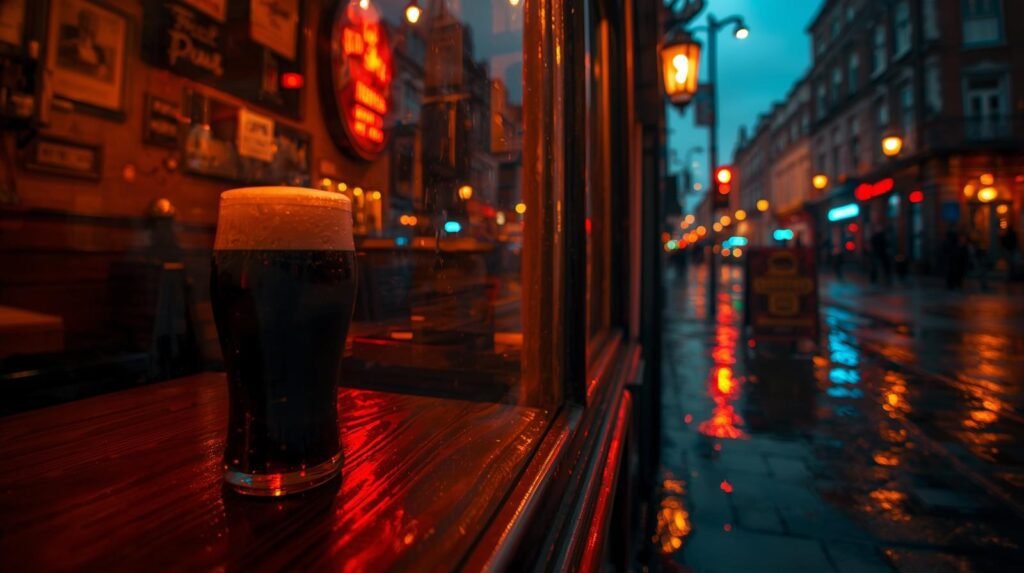
A neon glow cuts through condensation on the glass.
Grapefruit oil. Pine resin. A flicker of mango.
The bitterness lands clean — deliberate, architectural.
In 2026, the UK IPA is no longer a trend. It’s infrastructure.
India Pale Ale has become the structural backbone of modern British brewing — the style that independent producers refine, reinterpret, and recalibrate year after year. From haze-saturated New England expressions to sharply defined West Coast classics, IPA remains the most expressive canvas in the UK craft ecosystem.
But something has shifted.
The noise has settled. The experimentation has matured.
What remains is precision.
Brewers now approach hops with the discipline of data scientists — measuring oil composition, adjusting dry-hop timing, mapping flavor impact like a neural network. At the same time, they remain grounded in brewing heritage that stretches back to 18th-century export pale ales.
Part empire logistics.
Part algorithmic design.
This 2026 edition of the Ultimate UK IPA Guide is not a hype list. It’s a calibrated selection. We examine the beers that continue to define the category — based on consistency, reputation, brewing integrity, and availability across the UK.
You’ll discover:
- How the UK craft landscape looks in 2026
- Why IPA still leads the modern beer conversation
- The 10 UK IPAs that matter most right now
- How to pair, serve, and store them with precision
- The observable trends shaping the next evolution of hops
No invented movements.
No speculative revolutions.
Just signal.
Pour slowly. Let the aroma rise.
The system begins here.
The UK Craft Beer Landscape in 2026
At street level, the UK beer scene feels quieter than it did a decade ago.
Fewer headlines.
Less frenzy.
More focus.
Between 2010 and 2020, the number of breweries in the UK more than tripled, reshaping the national beer identity. According to the Society of Independent Brewers & Associates (SIBA), that rapid expansion marked one of the most dramatic growth phases in modern British brewing history. Today, while the total number of operating breweries has stabilized compared to peak years, the sector remains dense, competitive, and deeply creative.
What changed is not the passion — but the precision.
In 2026, the UK craft landscape is defined by three forces:
1. Consolidation and Maturity
The explosive growth phase has cooled. Some breweries have merged, some have closed, and others have scaled with measured intent. Shelf space is harder to win. Distribution is strategic, not accidental.
Survival now depends on clarity of identity.
2. Independence as a Value Signal
The distinction between independent breweries and multinational-owned brands remains relevant. Independent producers typically operate at smaller scale, release seasonal or limited batches, and maintain closer ties to local taprooms and festivals.
Organizations such as SIBA continue to represent and support independent brewing across the UK. Transparency matters more than ever — consumers check ownership, sourcing, and brewing philosophy before they check ABV.
3. Data-Informed Brewing
Modern IPA production is increasingly analytical.
Brewers track hop oil percentages, fermentation temperature curves, and dry-hop saturation rates with laboratory-level attention. Digital gravity readings replace guesswork. Sensory panels validate consistency batch after batch.
It’s not clinical.
It’s calibrated.
The influence of global craft movements — particularly the American hop renaissance documented by the Brewers Association — continues to shape recipe design. Yet UK brewers are no longer imitating. They are refining.
London remains a gravitational hub, with dense clusters of breweries in areas like Bermondsey and Tottenham. But regional scenes are equally vital: Cornwall’s coastal producers, Manchester’s hop-forward innovators, Leeds’ balanced modernists, Scotland’s export-driven pioneers.
Taprooms glow against industrial backdrops. Stainless steel tanks hum under sodium lights. Cans roll off compact lines destined for specialist bottle shops and national retailers alike.
And IPA?
IPA remains the anchor.
Despite the rise of lagers, stouts, and mixed fermentation projects, India Pale Ale still commands disproportionate shelf presence and tap handles. It is the style that signals technical skill, hop sourcing capability, and brand identity.
In 2026, the UK IPA category is no longer experimental chaos.
It is structured diversity.
Measured bitterness curves.
Controlled haze stability.
Defined flavor architecture.
The era of reckless hopping has passed.
The era of deliberate expression has arrived.
Understanding IPA: From Empire Logistics to Hop Algorithms
Before haze.
Before cryo hops.
Before neon taprooms glowing against London rain —
There was distance.
A Beer Built for the Voyage
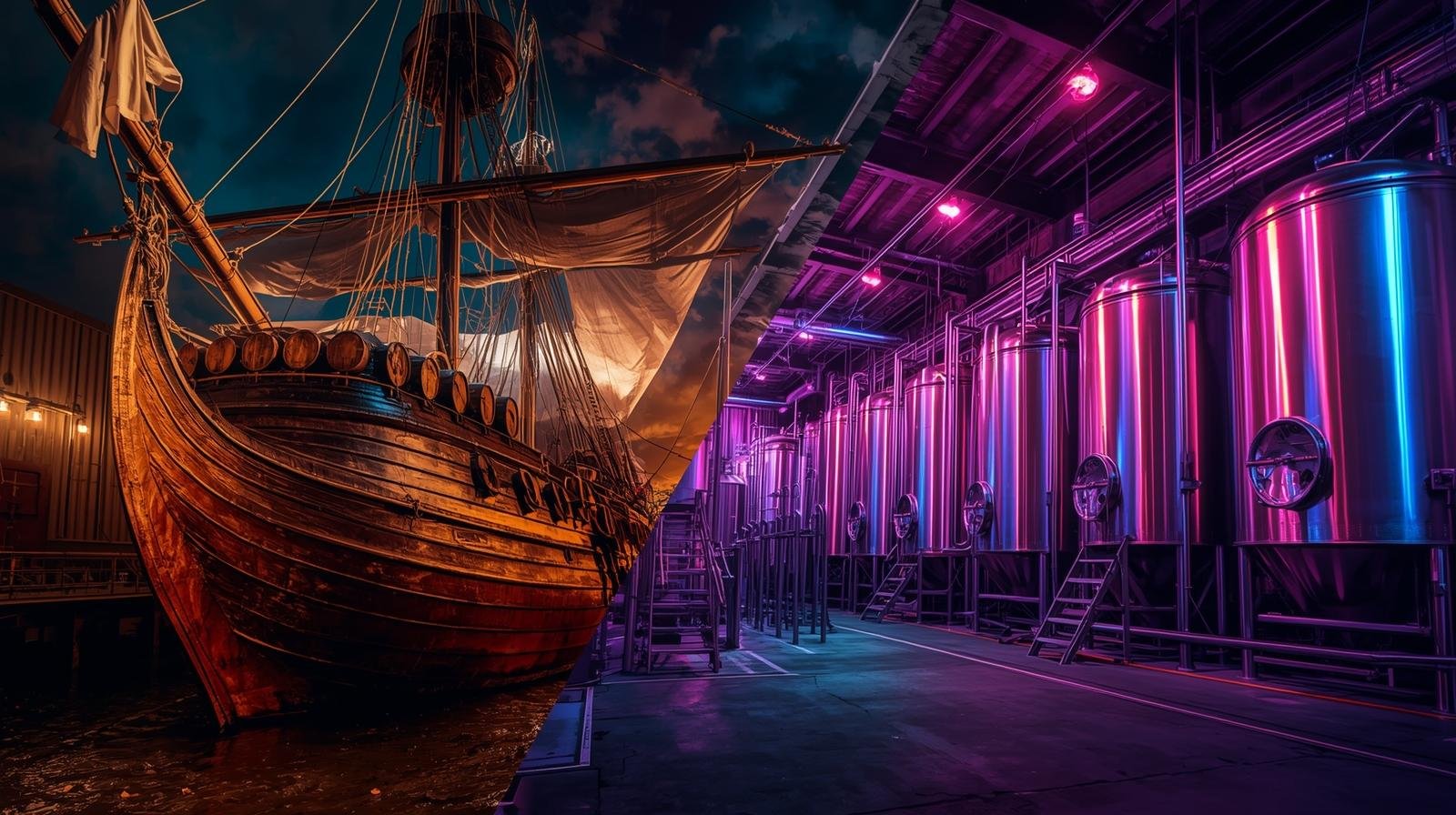
The India Pale Ale emerged in 18th-century Britain as a practical solution to global trade. Breweries increased hop rates and alcohol levels to stabilize pale ales during long sea journeys to colonial India. Hops acted as a preservative. Alcohol reinforced structure.
The beer survived the voyage.
And the name survived the empire.
Despite the mythology, IPA was brewed in Britain — not in India. Historical documentation from brewing records and trade archives confirms its origin as an export adaptation of existing pale ales.
What began as logistics became preference.
Drinkers at home developed a taste for bitterness.
The American Amplification
Fast forward two centuries.
In the late 20th century, American craft brewers intensified hop character using bold domestic varieties such as Cascade, Centennial, and Chinook. Bitterness increased. Aromatics exploded. IPA became the defining style of the American craft movement — documented extensively by the Brewers Association.
The UK watched.
Then responded.
British brewers adopted modern hopping techniques — dry-hopping regimes, late kettle additions, hop bursting — and began integrating both imported and domestic varieties. The result was not imitation, but hybridisation.
Tradition met innovation.
Malt heritage met volatile hop oils.
The 2026 UK IPA Spectrum
Today, the UK IPA category is not a single style but a structured family.
West Coast IPA
Clear. Dry. Assertively bitter.
Expect grapefruit pith, pine resin, firm carbonation, and a clean finish. Bitterness is intentional — often above 50 IBUs.
New England IPA (NEIPA)
Hazy. Soft. Saturated with tropical fruit esters.
Low perceived bitterness, high aroma intensity, creamy mouthfeel from protein-rich grists and controlled fermentation.
Session IPA
Lower ABV — typically between 3.5% and 4.5%.
High drinkability. Elevated hop aroma without alcoholic weight.
Double / Imperial IPA
7% ABV and above.
Concentrated hop presence layered over a stronger malt backbone. Alcohol warmth becomes structural.
Black IPA
Roasted malts meet bright hops.
Coffee and cocoa interplay with citrus oils.
The Brewers Association’s style guidelines provide technical benchmarks for these categories, including bitterness ranges and alcohol parameters.
British Hops, Recalibrated
A notable development in recent years is the growing visibility of British-grown aromatic hops. Varieties such as Harlequin, Jester, and Olicana have demonstrated tropical and stone-fruit characteristics once associated primarily with American or New Zealand hops.
This shift is not ideological.
It is practical and sensory.
Shorter supply chains. Reduced transport. Distinctive terroir expression.
The result is a UK IPA identity that feels less derivative and more defined.
From Intuition to Measured Design
“In beer, data is the new intuition.”
Modern IPA brewing is increasingly analytical. Brewers monitor fermentation curves, dissolved oxygen levels, dry-hop contact time, and yeast biotransformation effects with precision. Software tracks repeatability. Sensory panels validate balance.
Yet IPA remains emotional.
The aroma still hits first.
The bitterness still structures the sip.
From wooden barrels on sailing ships to stainless steel fermenters under urban light, IPA has moved from preservation strategy to precision craft.
Empire logistics became hop architecture.
And in 2026, that architecture is sharper than ever.
The Top 10 UK IPA Guide (2026 Edition)
Before we begin, a principle.
This list is not about novelty alone. It reflects breweries with proven consistency, technical capability, and national availability in 2026. Recognition from competitions, retailer presence, and sustained consumer ratings all contribute — but longevity matters just as much as innovation.
These are beers that continue to define the UK IPA signal.
1. Jaipur — Thornbridge Brewery
Style: American IPA
ABV: 5.9%
Some beers age.
Some become reference points.
First brewed in 2005, Jaipur remains one of the clearest bridges between traditional British brewing and modern hop expression. Expect bright citrus, restrained tropical fruit, and a bitterness that resolves cleanly without aggression.
The malt base provides structure rather than sweetness. Carbonation lifts the aromatics. The finish is dry, measured, precise.
Jaipur continues to appear in award listings and retailer best-seller charts — not because it is trendy, but because it is reliable.
A benchmark IPA.
Still calibrated.
2. Steady Rolling Man — DEYA Brewing Company
Style: New England IPA
ABV: 5.2%
Soft haze under industrial light.
Steady Rolling Man has become one of the UK’s most recognisable New England IPAs. Low bitterness. Saturated tropical aroma. A rounded mouthfeel built through protein-rich grains and careful yeast management.
Mango. Peach. Subtle citrus oil.
This is not maximalist sweetness. It’s controlled juiciness. The hop saturation feels dense yet balanced — a sign of disciplined dry-hopping and oxygen management.
For many drinkers, this remains the modern hazy archetype.
3. Double Dank — Verdant Brewing Co.
Style: Double IPA
ABV: 8.0%
Intensity without collapse.
Verdant’s Double Dank leans into resin, herbal depth, and concentrated hop oils. Pine and citrus peel lead, supported by a malt backbone strong enough to hold 8% alcohol without tipping into heaviness.
The bitterness is firm but structured.
Double IPA is often a test of restraint. Here, it feels intentional — the alcohol warmth integrated, not dominant.
A beer for experienced hop drinkers who value clarity within power.
4. Big Sea IPA — North Brewing Co.
Style: West Coast IPA
ABV: 5.5%
Clear glass. Defined edges.
Big Sea IPA represents the continued relevance of the West Coast template in the UK. Grapefruit zest, pine resin, clean bitterness above the midpoint, and a dry finish.
No haze.
No softness.
This is structural bitterness — the kind that resets the palate between sips.
In a haze-dominated market, Big Sea demonstrates that clarity still carries weight.
5. Hop, Skip & Juice — Vocation Brewery
Style: Hazy IPA
ABV: 5.7%
Approachability engineered.
Stone fruit aromatics dominate: apricot, mango, soft citrus. Bitterness remains subdued, but not absent. The mouthfeel sits between plush and crisp — accessible without sacrificing identity.
Vocation’s national distribution ensures visibility, but the recipe discipline sustains demand.
An IPA designed for repeat pours.
Balanced, not loud.
New to hazy IPAs?
Explore our in-depth guide to Hazy IPA brewing science and style evolution.
6. Hazy Jane — BrewDog
Style: New England IPA
ABV: 5.0%
Mass distribution rarely guarantees balance.
This one does.
Hazy Jane delivers mango, pineapple, and restrained bitterness with reliable consistency. Its supermarket presence makes it accessible, but its recipe still adheres to contemporary NEIPA principles.
For new drinkers entering the IPA category, Hazy Jane often serves as a first point of reference.
Accessible. Structured. Widely available.
7. Lumina — Siren Craft Brew
Style: Session IPA
ABV: 4.2%
Lower alcohol does not require lower complexity.
Lumina layers citrus zest and tropical fruit over a lean malt base. Carbonation remains lively. The bitterness is light but supportive.
Designed for extended drinking without fatigue, Lumina demonstrates how session-strength IPA can retain hop presence without alcohol dominance.
Light body.
Clear expression.
8. Faith — Northern Monk
Style: Hazy Pale / IPA Hybrid
ABV: 5.0%
Faith sits at the intersection of pale ale and IPA.
Soft haze. Moderate bitterness. Citrus and passionfruit notes dominate, supported by balanced sweetness.
Northern Monk’s production scale allows broad availability, yet Faith retains its craft identity through recipe discipline and consistent sensory outcomes.
A bridge beer — accessible yet expressive.
9. Cannonball — Magic Rock Brewing
Style: American IPA
ABV: 7.4%
Higher ABV. Sharper edges.
Cannonball leans into pine, grapefruit, and firm bitterness. Alcohol warmth integrates with a solid malt core, reinforcing rather than overwhelming the hop profile.
This is closer to the American IPA revival of the early 2010s — assertive, resin-forward, unapologetic.
For drinkers who prefer bitterness above haze.
10. Double IPA (Rotational Release) — Cloudwater Brew Co.
Style: Double IPA
ABV: Typically 8%+
Cloudwater’s rotational Double IPAs frequently experiment with hop combinations, yeast strains, and dry-hop intensities. While individual batches vary, the brewery’s reputation for technical rigor remains consistent.
Expect layered tropical fruit, measured bitterness, and alcohol warmth integrated through careful fermentation control.
Cloudwater’s limited releases often sell quickly, but availability through specialist retailers ensures periodic access.
Innovation without theatricality.
Why These Beers Matter
Each selection reflects:
- Sustained brewery reputation
- Demonstrated technical consistency
- Observable consumer demand
- National or regional availability
The UK IPA field in 2026 is crowded. These beers endure not because they shout — but because they deliver repeatable precision.
From Jaipur’s historic continuity to Cloudwater’s rotational experimentation, the spectrum remains wide.
Clear to hazy.
Session to imperial.
Resin to mango.
The architecture of bitterness still defines the structure.
But the expression is broader than ever.
Pairing IPA with Food: Flavor Architecture
IPA is not just a drink.
It’s a structural tool.
Bitterness cuts. Carbonation lifts. Hop oils amplify aroma in ways that reshape how food behaves on the palate.
In 2026, pairing IPA is less about cliché and more about calibration.
Cutting Through Fat
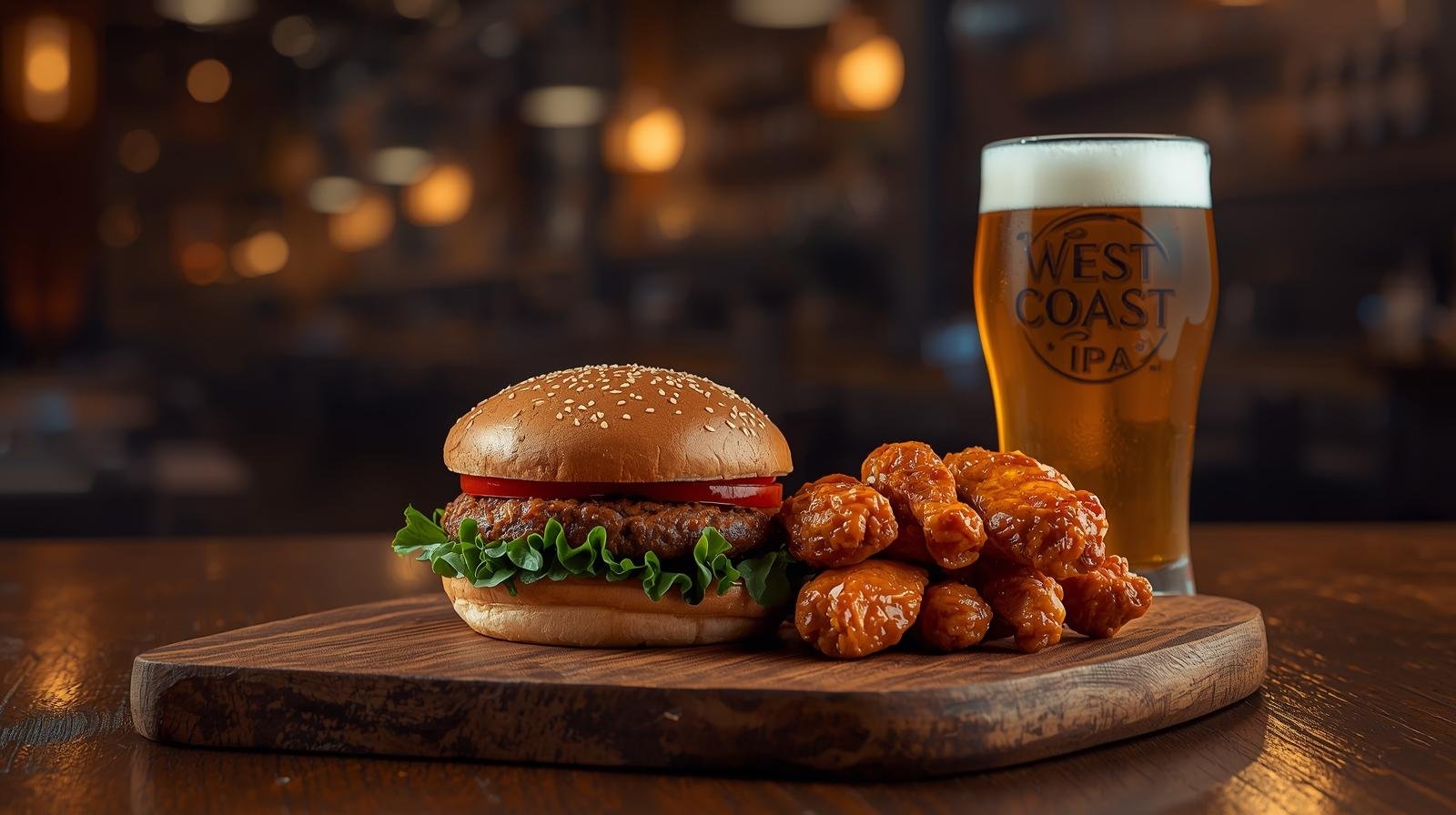
West Coast IPAs — such as Big Sea IPA from North Brewing Co. — excel with rich, fatty dishes.
Think char-grilled burgers.
Smoked brisket.
Sharp cheddar melting into toasted brioche.
The bitterness slices through fat molecules, resetting the palate between bites. Pine and grapefruit notes act like citrus squeezed over grilled meat — brightening without overpowering.
The effect is cleansing.
Structural.
Managing Heat
Hazy IPAs like Steady Rolling Man from DEYA Brewing Company pair exceptionally well with spice.
Thai green curry.
Buffalo wings.
Korean fried chicken.
The lower perceived bitterness and rounded mouthfeel soften chili heat, while tropical hop aromatics echo coriander, lemongrass, and ginger. The result is synergy, not competition.
Umami and Roast
American-style IPAs such as Jaipur from Thornbridge Brewery hold their own against umami-heavy dishes.
Mushroom risotto.
Blue cheese.
Roasted aubergine with tahini.
The malt backbone provides just enough sweetness to balance salt and depth, while the hops introduce contrast.
Contrast creates dimension.
Desserts and Fruit
Fruity NEIPAs can also work alongside lighter desserts.
Lemon cheesecake.
Mango sorbet.
Passionfruit tart.
The hop-derived fruit notes mirror the dish, creating a layered aromatic experience rather than a clash. The key is avoiding excessive sweetness in either component.
The Intensity Rule
Pair strength with strength.
- Session IPAs → lighter dishes like grilled fish or salads
- Standard IPAs → burgers, tacos, barbecue
- Double IPAs → rich stews, strong cheeses
Overpowering food flattens beer.
Overpowering beer silences food.
Balance is architectural.
When pairing is done well, IPA becomes more than accompaniment. It becomes a co-designer of flavor — reshaping sweetness, moderating spice, amplifying aroma.
Bitterness is not aggression.
It’s alignment.
Serving Precision: Glassware, Temperature, Freshness
An IPA can be technically perfect — and still underperform in the glass.
Serving is not cosmetic.
It’s structural.
Glassware: Engineering Aroma
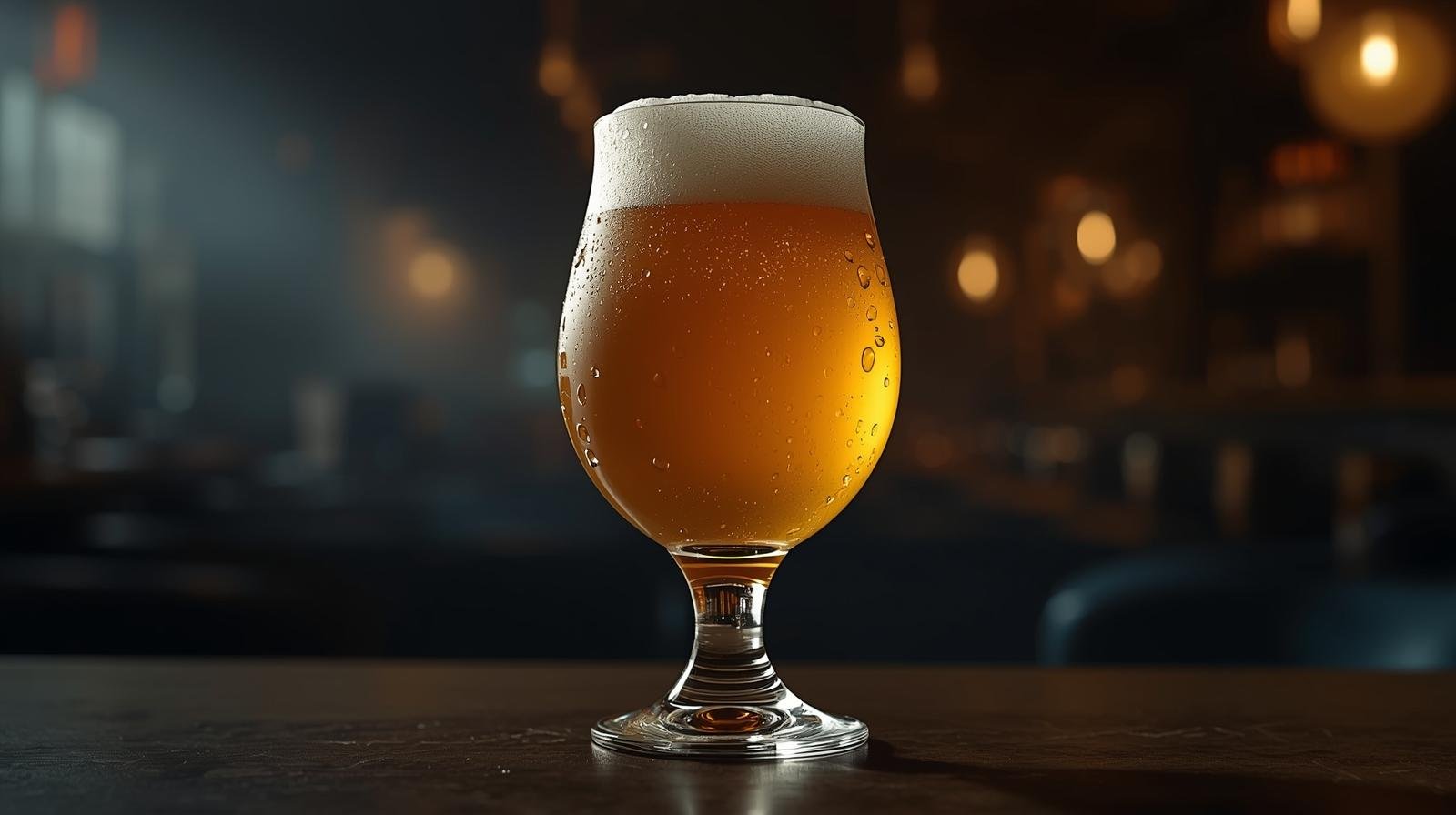
The ideal IPA glass is tulip-shaped.
A narrowing rim concentrates volatile hop compounds, directing citrus oils and tropical esters toward the nose. The slight outward flare at the lip supports head retention, preserving aromatics with each sip.
For higher-ABV beers such as Cannonball from Magic Rock Brewing, a stemmed or snifter-style glass enhances warmth integration and aroma density.
The traditional Nonic pint glass — common across UK pubs — remains functional, but it disperses aroma more quickly.
For casual drinking, it works.
For precision tasting, shape matters.
Temperature: Release the Signal
Too cold, and hop expression contracts.
Too warm, and bitterness can feel heavy.
Use these calibration points:
- Session IPA (3.5–4.5% ABV): 4–6°C
- Standard IPA (5–6.5% ABV): 6–8°C
- Double / Imperial IPA (7%+ ABV): 8–10°C
At the correct temperature, hop oils volatilize gradually, allowing layered aroma perception rather than a single burst.
Freshness: IPA Is Time-Sensitive
IPA is best consumed fresh.
Extended exposure to oxygen or heat dulls hop brightness and introduces muted flavors. Store cans and bottles upright in a cool, dark place — ideally refrigerated — and avoid sunlight, which can create lightstruck off-flavors.
Hazy IPAs are particularly sensitive due to higher hop loads and protein content.
Freshness preserves architecture.
Delay erodes detail.
Serve deliberately.
The beer will respond.
Trends Shaping UK IPA in 2026
Trends in mature beer markets rarely arrive as revolutions.
They surface gradually.
They gain visibility.
They normalize.
In 2026, several observable shifts continue shaping the UK IPA category.
British-Grown Hops, Reconsidered
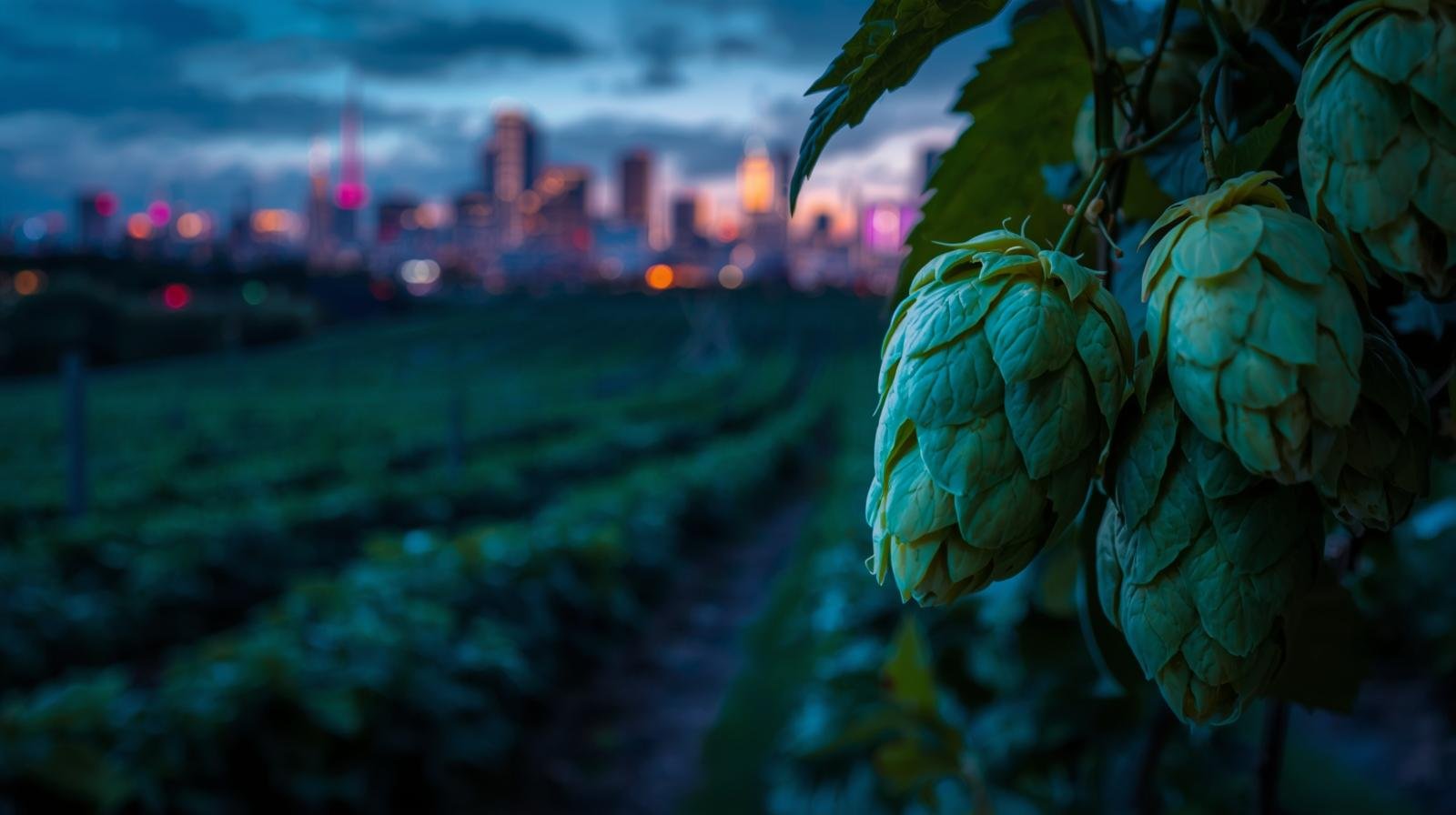
English hop development has accelerated over the past decade. Varieties such as Harlequin and Olicana are increasingly used not as supporting ingredients, but as primary aroma drivers.
Tropical notes. Apricot. Passionfruit.
This reduces reliance on imported hops while offering a distinct regional fingerprint. UK hop growers have invested in breeding programs that align with modern IPA expectations — high oil content, expressive aroma, stable yield.
Local sourcing is no longer nostalgic.
It’s strategic.
Sustainability as Operational Standard
Environmental awareness is now embedded in brewery planning rather than marketing language.
Across the UK, producers are implementing:
- CO₂ capture systems during fermentation
- Water efficiency measures
- Local malt sourcing where possible
- Energy optimization within brewhouses
These shifts are gradual but measurable. Independent breweries increasingly communicate sustainability metrics transparently rather than abstractly.
Not performative.
Operational.
Hybrid Interpretations
Cold IPA, Sour IPA, and mixed-fermentation hop-forward beers continue to appear in limited releases. These hybrids borrow techniques from lager brewing or sour fermentation while maintaining IPA-level hop intensity.
They remain niche compared to West Coast and NEIPA styles, but experimentation persists — particularly among breweries with strong taproom cultures.
Innovation continues.
But without spectacle.
Alcohol-Free Refinement
Low- and no-alcohol IPAs are more technically convincing than they were five years ago.
Producers such as Big Drop Brewing Co. demonstrate that hop aroma can be preserved through careful dealcoholisation and fermentation control.
The category is not replacing full-strength IPA.
It is expanding access.
The 2026 UK IPA landscape is not chasing novelty.
It is refining detail.
Optimising process.
Sharpening identity.
The BeerMadness Signal
After decades of reinvention, IPA remains Britain’s most adaptive beer style.
It has absorbed American hop intensity.
It has reconnected with British agriculture.
It has embraced laboratory precision.
Yet its core remains unchanged: bitterness structured by balance.
In 2026, the UK IPA category is neither chaotic nor complacent. It is calibrated. Breweries understand oxygen management. They refine yeast selection. They adjust hop timing to control aromatic volatility rather than chase saturation for its own sake.
The result is not louder beer.
It is clearer beer.
From the enduring architecture of Jaipur at Thornbridge Brewery to the rotational experimentation of Cloudwater Brew Co., the signal remains strong.
IPA continues to function as both benchmark and laboratory.
Part heritage.
Part forward system.
The bitterness still lands first.
But now it lands with intent.
Frequently Asked Questions About UK IPAs (2026)
What is the most popular IPA in the UK right now?
Popularity varies by region and retailer, but widely distributed IPAs such as Punk IPA from BrewDog and Jaipur from Thornbridge Brewery remain consistently visible across supermarkets, pubs, and specialist shops.
Are UK IPAs different from American IPAs?
UK IPAs often show more balance between malt and hop bitterness, though many breweries adopt modern American techniques. The distinction is narrowing as global hop sourcing and shared brewing knowledge increase.
Are IPAs stronger than other beers?
Most standard IPAs range from 5% to 7% ABV. Double or Imperial IPAs exceed 7%. Session IPAs typically fall between 3.5% and 4.5%.
What is the best glass for drinking IPA?
A tulip-shaped or IPA-specific glass concentrates aroma and enhances head retention. Pint glasses are suitable for casual drinking but disperse hop aromatics more quickly.
How should IPA be stored?
Store upright in a cool, dark place — ideally refrigerated. IPA is best consumed fresh, as hop aromatics diminish over time.
Are alcohol-free IPAs worth trying?
Recent advances in brewing and dealcoholisation have improved flavor retention significantly. Breweries such as Big Drop Brewing Co. produce alcohol-free IPAs with notable hop character.