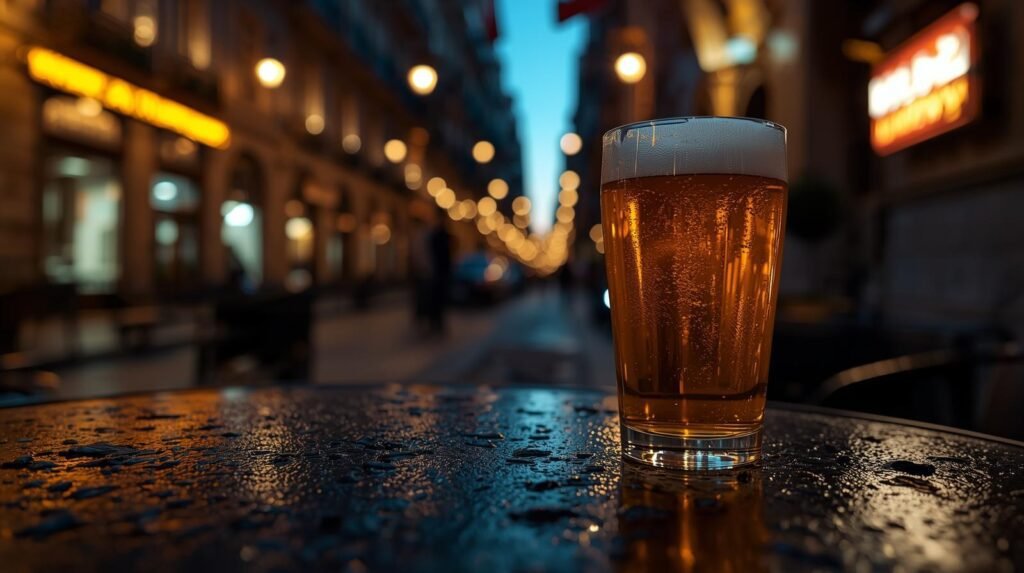
The city is quiet in that electric way.
Streetlights hum. Glass chills.
A pilsner lands on the bar like a precision instrument.
The foam locks in.
The body stays razor-straight.
The first sip snaps clean, then disappears.
This is crispness in 2026.
Not nostalgia.
Not simplicity.
But control.
In a beer landscape saturated with haze, pastry sweetness, and algorithm-driven excess, the crisp lager has become something else entirely.
A statement of intent.
A technical flex whispered, not shouted.
Pilsner is no longer the “easy” beer.
It’s the hardest one to get right.
Every flaw shows.
Every shortcut echoes.
Fermentation must be silent.
Water chemistry unforgiving.
Hop bitterness precise to the decimal.
There’s nowhere to hide.
That’s why the crispest lagers right now aren’t defined by hype or volume.
They’re defined by restraint.
By time.
By brewers willing to let cold do the talking.
In 2026, pilsner has evolved into a modern discipline.
Part brewery, part lab.
Part tradition, part tomorrow.
Across Europe and beyond, producers are refining lager brewing with surgical focus.
Longer conditioning.
Cleaner yeast profiles.
Sharper bitterness curves.
The result is a new generation of pilsners that feel carved, not built.
Bright without glare.
Dry without thinness.
Refreshing without emptiness.
This guide is not about popularity.
It’s about clarity.
We tasted, analyzed, and compared lagers that prioritize balance over noise and structure over spectacle.
Beers that stay cold in the glass and even colder in memory.
These are the 10 crispest lagers right now.
Measured by execution.
Defined by precision.
And shaped for the way we drink today.
Under neon light.
After midnight.
When the city finally exhales.
What Makes a Lager Truly “Crisp”?
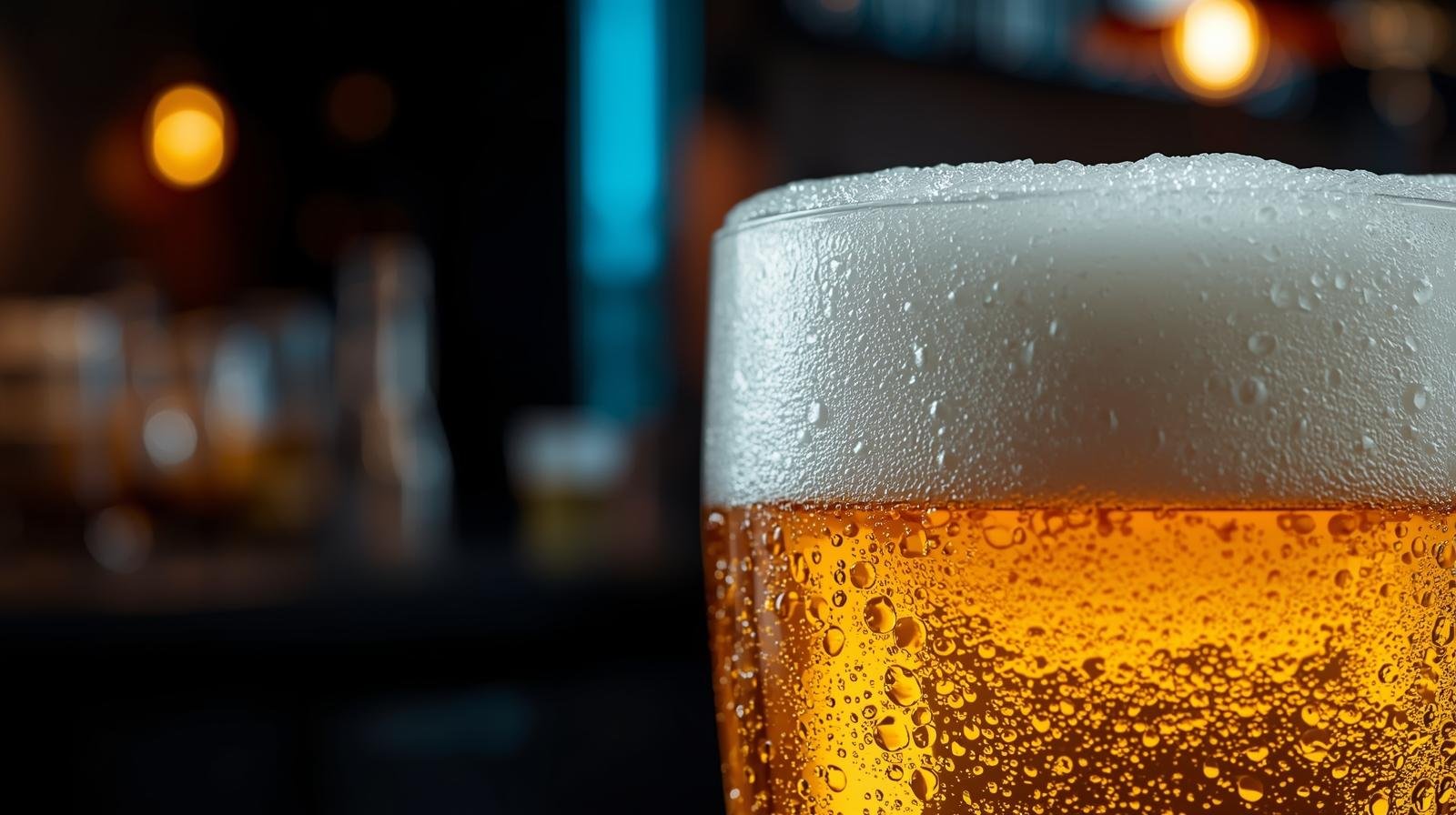
Crispness is not a flavor.
It’s a system.
A clean lager doesn’t announce itself.
It resolves.
Every element enters, does its job, then leaves without residue.
No drag.
No blur.
In technical terms, crispness lives at the intersection of fermentation control, water chemistry, bitterness design, and texture.
Miss one, and the illusion collapses.
Crispness Is a System, Not a Note
A crisp lager starts before yeast ever touches wort.
Water profile shapes everything.
Sulfate sharpens edges.
Chloride rounds them.
Too much softness, and the beer goes flabby.
Too much edge, and bitterness turns metallic.
Modern lager-focused breweries obsess over these ratios, often adjusting water down to single-digit parts per million.
Because crispness is engineered, not hoped for.
Malt selection follows restraint.
Low-protein base malts.
Minimal color contribution.
The goal is structural clarity, not depth.
Crisp beers aren’t empty.
They’re efficient.
Bitterness Without Noise
In crisp lagers, bitterness behaves like a line, not a wave.
Noble hops dominate here.
Not for aroma theatrics, but for predictable iso-alpha behavior.
The best examples deliver bitterness that arrives quickly, peaks briefly, then drops clean.
No linger.
No scratch.
This balance is why pilsners remain a technical benchmark across the industry, as outlined by resources from CraftBeer.com and technical guidance from the Brewers Association.
Precision hopping exposes shortcuts instantly.
There’s no haze to hide behind.
Texture Over Flavor Bombs
Carbonation is the silent architect of crispness.
Too low, and the beer feels lazy.
Too high, and it turns brittle.
Crisp lagers aim for tight, persistent bubbles that lift the palate and reset it between sips.
Foam matters here.
Stability matters more.
Extended cold conditioning allows proteins and polyphenols to settle, sharpening mouthfeel without stripping character.
Time replaces additives.
Cold replaces noise.
The final test is simple.
Does the beer invite another sip immediately?
If yes, the system worked.
If not, something broke upstream.
Crispness isn’t about minimalism.
It’s about discipline.
And in 2026, discipline is what separates good lagers from unforgettable ones.
How We Selected the 10 Crispest Lagers of 2026
Crispness doesn’t survive shortcuts.
So neither did our selection process.
This list was built with editorial restraint and technical scrutiny.
No popularity contests.
No hype cycles.
No algorithmic shortcuts.
Only execution.
A Filter, Not a Popularity Vote
Every lager considered for this guide had to meet four non-negotiable conditions.
First: commercial availability.
These beers are real, bottled or kegged, and actively produced.
Second: technical consistency.
One clean batch isn’t enough.
Crispness must repeat.
Third: stylistic discipline.
We focused on pilsners and closely related pale lagers.
No dry-hopped hybrids.
No unfiltered Kellerbier.
Fourth: freshness window.
A crisp lager lives and dies by time.
Beers evaluated past their prime were excluded.
This approach mirrors the technical benchmarks often outlined in educational resources from Brewers Association and style definitions curated by CraftBeer.com.
Not trends.
Standards.
What We Actively Left Out
Some beers didn’t make the cut by design.
Hoppy lagers with expressive late additions were excluded.
Their bitterness behaves differently.
Their crispness follows another logic.
Unfiltered lagers were also removed from consideration.
Haze softens edges.
This list is about sharpness.
We also avoided limited one-off releases.
Crispness should be reproducible, not accidental.
If a beer required a story to justify its presence, it didn’t belong here.
Editorial Taste Meets Technical Reality
Each lager was assessed using a repeatable framework.
Appearance first.
Clarity matters.
Then aroma.
Crisp lagers stay quiet here.
Bitterness structure followed.
Arrival.
Peak.
Exit.
Finally, the reset test.
Does the palate feel cleared or coated?
If the answer was “cleared,” the beer stayed in the conversation.
If not, it was cut.
This is why the list skews calm.
Why it favors balance over bravado.
Why every beer below feels intentional.
The result is not a snapshot of what’s loud in 2026.
It’s a map of what’s working.
Cold.
Precise.
Uncompromised.
The 10 Crispest Lagers Right Now (2026)
#1 — Pilsner Urquell (Czech Republic)
Style: Czech Pale Lager (Světlý Ležák)
ABV: 4.4%
Gold, but not loud.
Clear, but not sterile.
Pilsner Urquell remains the reference point because it still behaves like one.
In 2026, when many lagers chase sharpness through subtraction, Urquell achieves crispness through structure.
Its softness is deliberate.
Its bitterness measured, not minimal.
The first impression is malt-forward, but lean.
Fresh bread crust.
A whisper of honey.
Then the Saaz hops step in.
Herbal.
Dry.
Perfectly timed.
The bitterness doesn’t spike.
It tightens.
This is where Urquell still outclasses imitators.
The finish resolves cleanly without stripping the palate.
There’s texture, but no weight.
Part of that crispness comes from process choices that haven’t been “optimized away.”
Triple decoction.
Long lagering.
Open fermentation.
These are not romantic gestures.
They’re structural decisions.
Carbonation stays gentle, lifting aromatics without scrubbing flavor.
Foam holds tight, insulating the beer sip after sip.
Served cold—but not icy—the beer reveals its discipline.
Too warm, and the malt swells.
Too cold, and the hops flatten.
At the right temperature, it locks into place.
In a modern beer world obsessed with novelty, Pilsner Urquell still proves something quietly radical.
Crispness isn’t about absence.
It’s about balance maintained over time.
And nearly two centuries in, this lager still resets the bar.
#2 — Augustiner-Bräu Lagerbier Hell (Germany)
Style: Munich Helles Lager
ABV: 5.2%
Soft light.
Hard precision.
Augustiner Helles doesn’t announce crispness with sharp edges.
It earns it through control.
At first sip, the beer feels almost too gentle.
Pale gold.
Fine foam.
Barely a whisper of aroma.
Then the structure reveals itself.
The malt profile is smooth but exact.
Fresh dough.
A trace of biscuit.
Nothing more.
What makes this lager one of the 10 crispest lager expressions right now is not bitterness, but resolution.
The beer moves cleanly across the palate, then exits without residue.
There’s no sweetness left behind.
No hop scrape.
Just a clean reset.
Carbonation is perfectly dialed.
Enough lift to keep the body agile.
Never aggressive.
This is where many Helles-style lagers fail.
They soften until they blur.
Augustiner doesn’t blur.
It stays defined.
Fermentation character is nearly invisible.
No esters.
No sulfur linger.
Just cold discipline carried through to the glass.
Served properly—fresh, cold, and unadorned—this lager shows why Munich’s traditional breweries remain technical benchmarks rather than nostalgic symbols.
Crispness here is quiet confidence.
No tricks.
No updates needed.
Just a beer that knows exactly what it is.
#3 — Rothaus Brauerei Tannenzäpfle (Germany)
Style: German Pils
ABV: 5.1%
This is sharpness without aggression.
A pilsner cut on a clean edge.
Rothaus Tannenzäpfle pours brilliantly clear, pale straw under light.
The foam snaps into place, tight and resilient.
Aromatically, it stays restrained.
Fresh grain.
A faint herbal lift.
Then the bitterness arrives—fast, linear, decisive.
This is where Rothaus earns its reputation among technical brewers.
The hop bitterness doesn’t build in waves.
It lands once, firmly, then releases.
No echo.
No scrape.
The malt body exists only to support that structure.
Dry, neutral, disciplined.
What sets this beer apart in 2026 is its consistency of finish.
Every sip ends the same way:
clean palate, instant readiness for the next.
Carbonation is brisk but controlled, adding to the sense of snap without thinning the body.
Temperature matters here.
Serve it cold, not frozen.
Too warm, and the bitterness broadens.
Too cold, and the precision dulls.
In its ideal window, Tannenzäpfle feels engineered rather than expressive.
And that’s the point.
Among modern pilsners, this beer remains a masterclass in bitterness management.
Not louder.
Just cleaner.
A reference for anyone who believes crispness should feel intentional.
#4 — Jever Brewery Jever Pilsener (Germany)
Style: German Pils
ABV: 4.9%
This is crispness without compromise.
Dry to the edge.
Then drier still.
Jever doesn’t ease you in.
It draws a straight line and asks you to follow.
The pour is textbook pale gold, brilliantly clear, with a foam cap that holds like architecture.
Aromatically, it stays minimal.
Grain.
Wind.
A hint of grass.
Then comes the bitterness.
Sharp.
Immediate.
Unapologetically northern.
What makes Jever one of the 10 crispest lager benchmarks in 2026 is its refusal to soften for comfort.
The bitterness lands early and exits cleanly, leaving no sweetness behind to cushion the fall.
This is pilsner as palate reset.
Not refreshment through roundness, but through dryness and precision.
Water chemistry plays a central role here.
The mineral profile amplifies hop definition and strips away any illusion of malt weight.
The result is a beer that feels lighter than its ABV suggests.
Carbonation is brisk, reinforcing the dryness without turning abrasive.
Each sip clears the mouth completely.
There’s no warmth.
No fat.
No blur.
Jever rewards attention.
Served ice-cold, it can feel severe.
Let it warm slightly, and the structure reveals itself.
In an era where many lagers chase balance through softness, Jever remains a reminder that crispness can also be confrontational.
Clean doesn’t have to be gentle.
#5 — Trumer Privatbrauerei Trumer Pils (Austria)
Style: Austrian Pilsner
ABV: 4.9%
This is mountain crispness.
Clean water.
Cold patience.
Trumer Pils doesn’t chase sharpness through aggression.
It achieves it through purity.
The pour is brilliant and pale, almost glacial under light.
Foam forms quickly, fine-grained and stable.
Aroma stays restrained but telling.
Fresh grain.
Light herbal hops.
A faint mineral note.
On the palate, everything feels aligned.
The malt body is lean but present, providing just enough structure to carry the bitterness.
No sweetness lingers.
No heaviness develops.
Hop bitterness arrives with clarity rather than force.
Floral and grassy, it tightens the finish instead of dominating it.
This is where Trumer distinguishes itself in 2026.
The beer doesn’t dry the palate through harshness.
It clears it through balance.
Water chemistry plays a decisive role.
Soft Alpine water allows bitterness to remain precise, never brittle.
The result is a finish that feels cool rather than sharp.
Carbonation is elegant, lifting the beer without thinning it.
Each sip resets the mouth, inviting another without fatigue.
Trumer Pils sits between traditions.
Sharper than a Helles.
Gentler than northern German pilsners.
That middle ground is difficult to hold.
And here, it’s held with confidence.
A lager built on restraint, not reduction.
Crisp without severity.
Clean without emptiness.
#6 — Bitburger Brewery Bitburger Pils (Germany)
Style: German Pils
ABV: 4.8%
This is engineered crispness.
Clean lines.
No ornament.
Bitburger Pils has long been underestimated because of its scale.
That’s a mistake.
In 2026, it stands as one of the most technically reliable crisp lagers in wide circulation.
And reliability is the hidden currency of crispness.
The pour is flawless.
Bright gold.
Tight foam.
No haze, ever.
Aroma remains minimal by design.
Grain-forward.
A restrained herbal hop note.
The palate is where Bitburger shows discipline.
Malt enters quickly, then steps aside.
Bitterness follows with precision, not force.
The finish is dry, clean, and fast.
Nothing clings.
Nothing distracts.
This beer is calibrated for repetition.
Each sip resets the palate completely, making it one of the most drinkable crisp lagers on the list.
Carbonation sits slightly higher than softer styles, adding snap without aggression.
Served cold, it performs exactly as intended.
Bitburger doesn’t evolve in the glass.
It doesn’t need to.
In a modern beer culture obsessed with expression, this pilsner remains a reminder that execution at scale is its own craft.
Crispness here is consistency.
And consistency, when done this well, becomes a virtue.
#7 — Warsteiner Brewery Warsteiner Premium Pilsener (Germany)
Style: German Pils
ABV: 4.8%
This is clarity with polish.
A pilsner refined, not softened.
Warsteiner pours luminous pale gold, catching light even in low rooms.
The foam is compact and persistent, signaling precision before the first sip.
Aroma stays quiet.
Crackery malt.
A clean herbal note.
The bitterness profile is where Warsteiner earns its place among the 10 crispest lager examples right now.
It’s firm, but rounded.
Present, but never sharp.
Water purity plays a starring role here.
The brewery’s famously soft source allows bitterness to remain smooth while still finishing dry.
This balance creates a finish that feels composed rather than cutting.
The palate clears.
The mouth stays relaxed.
Carbonation is finely tuned, adding lift without distraction.
Nothing feels exaggerated.
Warsteiner excels in temperature range.
Cold, it refreshes cleanly.
Slightly warmer, it maintains structure without revealing flaws.
That stability matters.
In 2026, as many pilsners push extremes—either softer or sharper—Warsteiner holds center with confidence.
Crispness doesn’t always need edges.
Sometimes it needs alignment.
And here, everything lines up.
#8 — Oxbow Brewing Company Luppolo (United States)
Style: Italian-Style Pilsner
ABV: 5.0%
This is crispness translated, not copied.
Oxbow’s Luppolo takes the structural discipline of classic pilsner and applies a modern, measured twist—without crossing into hop theater.
The pour is bright and clean, pale gold with a lively foam cap.
Aromatically, it speaks softly but clearly.
Fresh grain.
A restrained herbal-citrus note.
The difference appears on the palate.
Bitterness here is precise but layered.
It arrives clean, then tapers gently, leaving the palate dry but not stripped.
There’s movement, but no clutter.
What keeps Luppolo firmly in the crisp category is restraint.
Late hopping is present, but dialed down to texture rather than aroma dominance.
The hops sharpen the finish instead of rewriting it.
Carbonation is tight, enhancing drinkability without pushing sharpness.
The mouthfeel stays lean, with no residual sweetness.
This beer reflects a broader reality in 2026.
Some American breweries are no longer trying to outshout European lager traditions.
They’re listening instead.
Luppolo feels modern without being loud.
Contemporary without losing discipline.
A pilsner shaped by observation, not ego.
#9 — Birrificio Italiano Tipopils (Italy)
Style: Italian-Style Pilsner
ABV: 5.2%
This is where crispness meets intention.
Tipopils helped define a category, but its place on this list is not historical.
It’s technical.
The beer pours hazy-adjacent compared to German examples, yet still reads clean in motion.
Foam is lively, persistent.
Aroma is expressive but disciplined.
Herbal hops.
Subtle citrus peel.
Fresh grain beneath it all.
On the palate, the bitterness profile is unmistakable.
Firm, structured, and drying.
What separates Tipopils from hop-forward lagers is control.
The hops sharpen the finish rather than expanding it.
They act as punctuation, not prose.
The malt base remains lean and supportive, allowing bitterness to define the beer’s crispness without overwhelming it.
The finish clears quickly, leaving a mineral dryness that invites another sip.
Carbonation reinforces that dryness, keeping the beer agile and alert.
In 2026, Tipopils remains relevant because it respects the line between expression and precision.
It flirts with aroma, but commits to structure.
Crispness here isn’t about invisibility.
It’s about clarity of intent.
And that intent still reads loud and clean.
#10 — Heater Allen Brewing Pils (United States)
Style: German-Style Pilsner
ABV: 5.0%
This is American lager brewing at its most disciplined.
Heater Allen’s Pils doesn’t reinterpret the style.
It executes it.
The pour is immaculate.
Bright straw.
Crystal clear.
A foam crown that settles with intent.
Aroma is restrained to the point of humility.
Fresh grain.
Soft herbal hops.
Nothing competing for attention.
On the palate, the beer moves with precision.
Malt presence is lean and neutral, designed to disappear at the right moment.
Bitterness arrives clean and measured, firm enough to define the finish, gentle enough to avoid bite.
The finish is fast.
Dry.
Resetting.
This is where Heater Allen earns its place among the 10 crispest lager examples right now.
Every sip clears the palate completely, leaving no sweetness, no hop residue, no fermentation artifacts.
Carbonation is dialed for snap, not sparkle.
The beer feels cold even as it warms slightly in the glass.
There’s no flourish here.
No signature twist.
Just a pilsner built around process fidelity—long lagering, clean yeast expression, and absolute respect for balance.
In a crowded modern lager landscape, Heater Allen proves something essential.
American brewers don’t need to embellish to compete.
They just need to execute.
This beer does.
Quietly.
Perfectly.
Again and again.
Where Crisp Lagers Are Heading Next
Cold signals shaping 2026

Crisp lagers aren’t getting louder.
They’re getting tighter.
Across the brewing world, the most visible shift isn’t new ingredients or flashy techniques.
It’s process focus.
Longer lagering cycles are quietly returning.
Not as nostalgia, but as necessity.
Time is doing work additives never could.
Brewers are also paying closer attention to water chemistry.
Not just softness versus hardness, but micro-adjustments that tune bitterness shape and mouthfeel.
Crispness lives in those margins.
This renewed attention mirrors technical guidance increasingly emphasized by organizations like the Brewers Association, where lager precision is treated as a benchmark, not a beginner’s exercise.
Another visible shift is restraint in hopping.
Late hopping hasn’t disappeared.
It’s being reduced and repositioned.
Rather than driving aroma, hops are being used to define finish.
To sharpen exits.
To clean edges.
This approach aligns with style definitions and educational material from CraftBeer.com, where pilsner clarity and balance remain central, even as interpretations evolve.
Fermentation control is tightening too.
Smaller yeast margins.
Cleaner profiles.
Less tolerance for character drift.
The goal isn’t neutrality.
It’s predictability.
In 2026, crisp lagers are becoming a brewer’s calling card.
Not because they sell the fastest.
But because they reveal everything.
Every flaw shows.
Every success holds.
This is why crispness feels newly relevant.
In a beer culture saturated with expression, discipline stands out.
The future of crisp lager isn’t radical.
It’s rigorous.
And under the glow of urban nights and cold taps, that rigor is starting to look very modern.
How to Drink a Crisp Lager Properly
Because precision doesn’t end at the brewery
Crisp lagers punish bad handling.
They don’t forgive shortcuts.
Serve them cold, not frozen.
Too warm, and structure loosens.
Too cold, and bitterness collapses.
Glassware matters.
Tall, narrow profiles preserve carbonation and focus the finish.
Skip the heavy mug.
Pour clean and decisive.
One smooth motion.
Let the foam set the tone.
Most importantly: drink them fresh.
Crispness fades quietly.
Time is not neutral.
Handle them well, and they reward you with clarity.
Handle them poorly, and the signal disappears.
The BeerMadness Signal
Crispness isn’t the absence of flavor.
It’s the presence of intent.
In a beer world crowded with noise, the cleanest lagers feel almost radical.
They don’t compete for attention.
They earn it.
Each beer on this list proves the same quiet point.
Precision is visible.
Discipline is drinkable.
Under neon lights or kitchen bulbs, late at night or after work, a truly crisp lager still does what beer was always meant to do.
It clears the mind.
Resets the palate.
And leaves nothing behind but the urge for another sip.
That’s not simplicity.
That’s mastery.
FAQ — Crisp Lagers Explained
What is a crisp lager?
A crisp lager is defined by clean fermentation, precise bitterness, tight carbonation, and a fast, dry finish.
The palate resets immediately after each sip, with no sweetness or residue.
What makes a pilsner crisp compared to other lagers?
Pilsners use low sweetness malt profiles, noble hop bitterness, and extended cold conditioning, which expose structure and flaws.
That transparency is why pilsners are often the crispiest lagers.
Are the crispiest lagers always bitter?
No.
Crispness is about resolution, not intensity.
Some crisp lagers rely on dryness and carbonation rather than strong hop bitterness.
Does freshness matter for crisp lagers?
Yes—more than almost any other beer style.
Oxidation quickly softens bitterness and dulls carbonation, reducing perceived crispness.
What is the ideal serving temperature for a crisp lager?
Most crisp lagers perform best between 4–7°C (39–45°F).
Colder mutes structure; warmer softens the finish.
Are unfiltered lagers less crisp?
Often, yes.
Haze can soften mouthfeel and blur bitterness, reducing sharpness.
This is why many benchmark crisp lagers follow filtration and cold-conditioning practices outlined by the Brewers Association.
Can American breweries make world-class crisp lagers?
Yes.
Many focus on process fidelity—water chemistry, yeast control, and lagering time—rather than stylistic reinvention.
These principles align with style guidance from CraftBeer.com.
Is Italian-style pilsner still considered crisp?
When restrained, yes.
If hops sharpen the finish instead of dominating aroma, crispness remains intact.