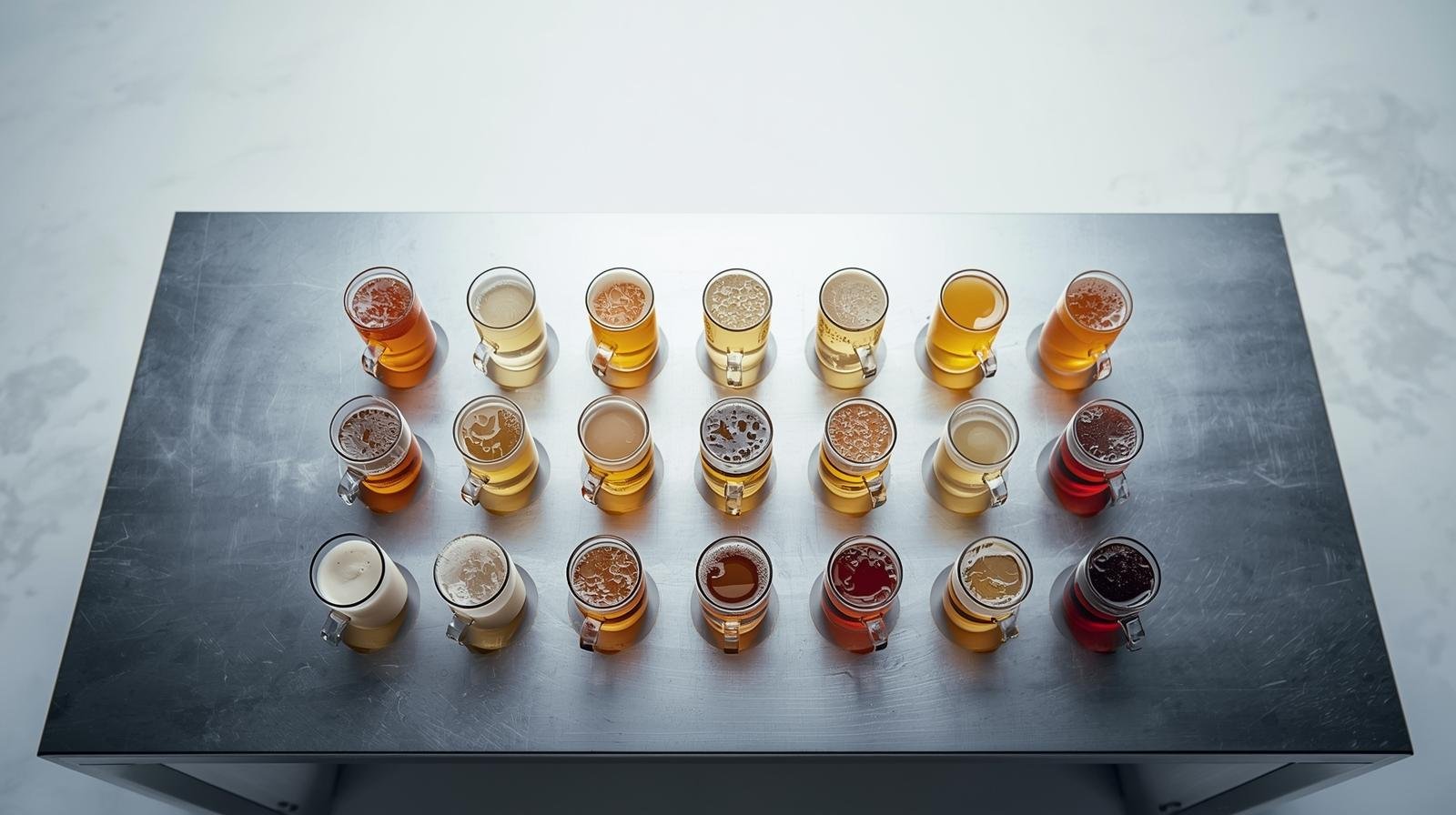
The stainless steel table gleams under white light.
Four glasses stand in a row — pilsner pale as straw, stout dark as orbit, IPA glowing amber, saison hazed gold.
On the counter: steak fat resting, citrus zest drying, a wedge of blue cheese breathing slowly.
This isn’t a kitchen.
It feels like a lab.
Because in 2026, beer & food pairing is no longer instinct alone.
It’s pattern recognition. Texture mapping. Sensory calibration.
Part brewery, part laboratory.
Part tradition, part tomorrow.
For decades, pairing advice lived in wine columns. Beer stood in the background — casual, versatile, underestimated.
Now the data is clear.
Carbonation changes mouthfeel.
Bitterness cuts fat.
Esters echo spice.
Residual sugars temper heat.
Beer doesn’t just match food.
It recalibrates it.
And that’s where this guide begins.
What You’ll Learn in This Guide
Beer & food pairing is the deliberate alignment of flavor intensity, texture, carbonation, bitterness, sweetness, and aromatic compounds between a dish and a beer style to enhance both simultaneously.
In this 2026 Flavor Matrix, you’ll discover:
- Why beer often outperforms wine at the table
- How to decode fat, salt, sweetness, acid, umami, and heat
- Exact style pairings for meat, cheese, global cuisine, vegetarian dishes, and desserts
- A quick-reference table for instant decisions
- Where pairing culture is evolving next
This isn’t a rulebook.
It’s a map.
And like any good map, it shows relationships — not rigid borders.
The hops glow like neon notes.
The malt body moves like bass.
The plate waits for resonance.
Let’s begin where pairing truly starts — not with food.
With structure.
What Is Beer & Food Pairing, Really?
Beer & food pairing is often explained in poetic terms. Harmony. Balance. Resonance.
But beneath the romance is structure.
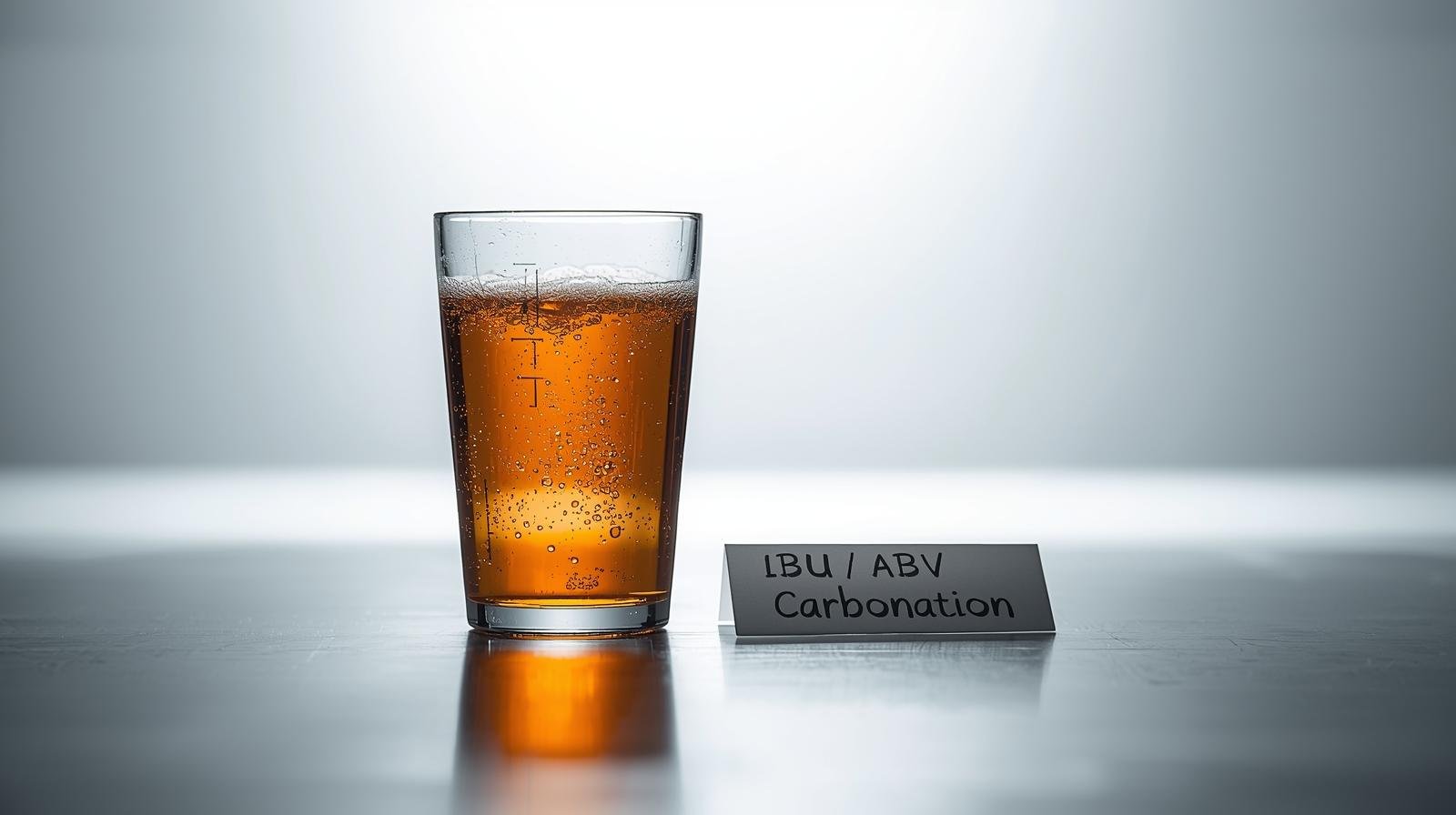
At its core, beer & food pairing is about aligning intensity, texture, carbonation, bitterness, sweetness, and aroma compounds so neither the plate nor the glass dominates.
It’s culinary physics. With foam.
The Four Core Pairing Principles
Industry educators and brewing organizations consistently frame pairing around four observable dynamics. The concepts are simple. The execution is precise.
1️⃣ Complement
Like mirrors facing each other.
Sweet malt with caramelized crust.
Roasted barley with grilled steak char.
Banana esters in hefeweizen with clove-spiced dishes.
When flavors echo, they amplify.
2️⃣ Contrast
Opposites sharpen perception.
Bitterness cuts sweetness.
Acidity brightens fat.
Carbonation scrubs richness.
A citrus-forward IPA against fried food doesn’t agree politely.
It resets the palate.
3️⃣ Cleanse
Carbonation is beer’s secret weapon.
Fine bubbles lift oils.
CO₂ reduces lingering heaviness.
Each sip prepares the next bite.
According to pairing guidance from the Brewers Association and educational materials on CraftBeer.com, carbonation is one of beer’s most distinctive structural advantages at the table.
Wine cannot replicate that scrubbing effect.
4️⃣ Cut
Alcohol and bitterness slice through fat.
An imperial stout with blue cheese.
A double IPA beside brisket.
Structure meets structure.
When intensity matches intensity, balance emerges.
Beer & food pairing works by balancing intensity, texture, carbonation, bitterness, and sweetness between a dish and a beer style. The four key strategies are complementing, contrasting, cleansing, and cutting flavors to enhance both elements simultaneously.
Why Beer Is Often More Versatile Than Wine
This is not a rivalry. It’s chemistry.
Beer operates across a wider structural spectrum:
- Bitterness (IBU scale)
- Carbonation levels
- Malt sweetness
- Roast intensity
- Ester profiles
- Variable alcohol ranges
The style guidelines published by the Beer Judge Certification Program document over 100 distinct beer styles. Each brings a different structural fingerprint to the table.
Carbonation alone changes texture dramatically.
A pilsner feels sharp and clean.
A barleywine feels dense and warming.
A saison feels effervescent and dry.
Wine rarely offers that range within one category.
Beer can be crisp like mineral water.
Or layered like dessert.
And that elasticity matters.
Because food today is global. Complex. Fermented. Spiced.
Pairing must respond accordingly.
Intensity Is the First Rule
Before flavor comes strength.
A delicate white fish disappears beside an imperial stout.
A smoked ribeye overpowers a light lager.
Intensity alignment is foundational.
Professional pairing programs emphasize this hierarchy:
- Match intensity
- Consider texture
- Align or contrast flavor
- Adjust for sweetness or bitterness
Everything begins with weight.
Think of pairing like audio engineering.
Low bass dishes need structured beers.
High treble dishes need brightness.
Get the volume right.
Then fine-tune the notes.
Beer & food pairing isn’t instinct alone anymore.
It’s pattern recognition.
And in 2026, the patterns are clearer than ever.
Next, we build the framework.
The matrix.
The 2026 Flavor Matrix — How We Built It
White tiles. Stainless steel. Clean lines.
In the LAB mindset, pairing begins with variables — not vibes.
If beer & food pairing is sensory, it is also measurable. Flavor perception follows patterns. Brewing science documents structure. Culinary technique defines intensity.
The 2026 Flavor Matrix organizes those signals into something usable.
Not rigid rules.
A working grid.
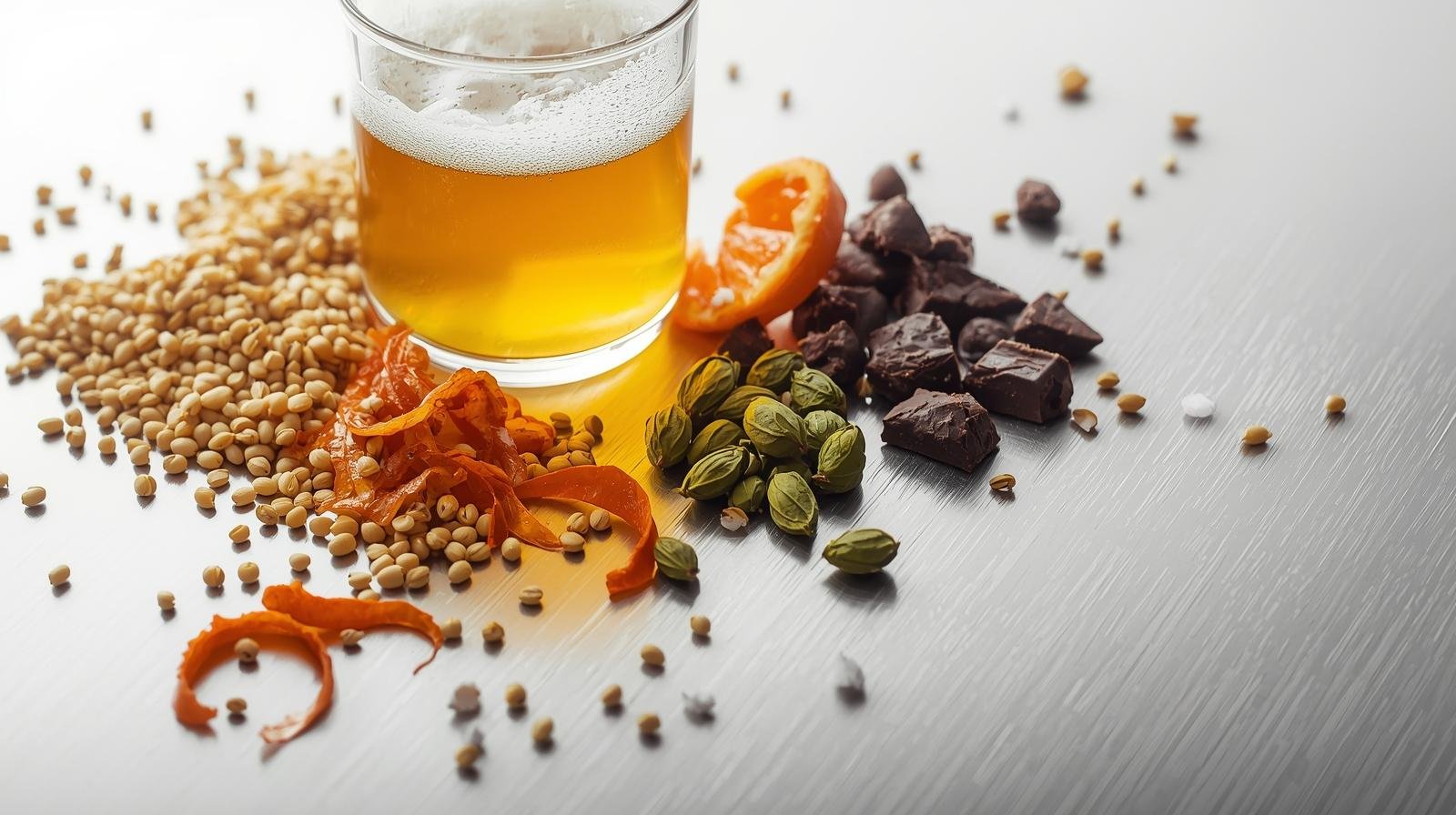
Step 1: Identify the Food Variables
Every dish, no matter how complex, leans on six dominant taste drivers:
- Fat
- Salt
- Sweetness
- Acidity
- Umami
- Heat (capsaicin spice)
Strip away plating and garnish, and one or two of these dominate.
A ribeye is fat + umami.
Thai curry is heat + sweetness.
Oysters are salt + brine + subtle sweetness.
Pairing begins by identifying the loudest signal on the plate.
Step 2: Map the Beer Variables
Beer offers its own measurable architecture:
- IBU (Bitterness level)
- SRM (Color / roast depth)
- ABV (Alcohol structure)
- Residual sweetness
- Carbonation level
- Ester & phenolic profile
The style framework provided by the Beer Judge Certification Program defines these ranges precisely across global styles.
Meanwhile, educational resources from the Brewers Association document how brewing ingredients influence body, bitterness, and aroma development.
When we overlay food drivers with beer structure, patterns appear.
Fat responds to carbonation.
Heat responds to residual sweetness.
Salt amplifies malt character.
Sweetness softens bitterness.
Not trends.
Physiology.
The Flavor Matrix Framework
Below is the simplified structure we’ll use throughout this guide:
| Food Dominant Trait | Beer Structural Counterpoint | Why It Works |
|---|---|---|
| Fat | High carbonation, moderate bitterness | Cleanses and cuts |
| Salt | Malt sweetness or crisp lager | Enhances sweetness |
| Sweet | Bitterness or dry finish | Prevents cloying |
| Acid | Malt backbone | Softens sharpness |
| Umami | Roast, malt depth | Amplifies savoriness |
| Heat | Lower bitterness, some sweetness | Calms capsaicin |
This matrix does not eliminate creativity.
It narrows variables.
And narrowing variables improves precision.
The 2026 Flavor Matrix aligns six dominant food traits — fat, salt, sweet, acid, umami, and heat — with measurable beer characteristics such as carbonation, bitterness (IBU), malt sweetness, alcohol structure, and roast depth to optimize beer & food pairing outcomes.
Why 2026 Feels Different
Pairing isn’t new.
But awareness has shifted.
Breweries increasingly publish detailed tasting notes.
Restaurants list IBUs and style descriptions.
Sensory training programs are more visible within brewing education.
According to reports and resources from CraftBeer.com, consumer interest in understanding beer styles continues to expand alongside the growth of independent breweries.
The result?
More informed drinkers.
More intentional menus.
More structure at the table.
Not louder flavors.
Clearer ones.
LAB Mindset: Remove Noise
When pairing fails, it’s rarely because flavors “don’t match.”
It’s because structure wasn’t respected.
Too much bitterness with spicy food.
Too little body with heavy dishes.
Excess sweetness on both sides.
The matrix filters noise.
Ask three questions:
- What dominates the dish?
- What dominates the beer?
- Are they echoing, balancing, or fighting?
If fighting — adjust intensity first.
Flavor second.
We now have the structure.
Next, we test it against real plates.
Protein. Smoke. Fire.
Meat Dishes — From Smoke to Sear
Protein changes the equation.
Heat transforms texture.
Maillard reactions generate umami.
Fat coats the palate.
This is where beer’s structure proves itself.
Intensity matters more here than anywhere else.
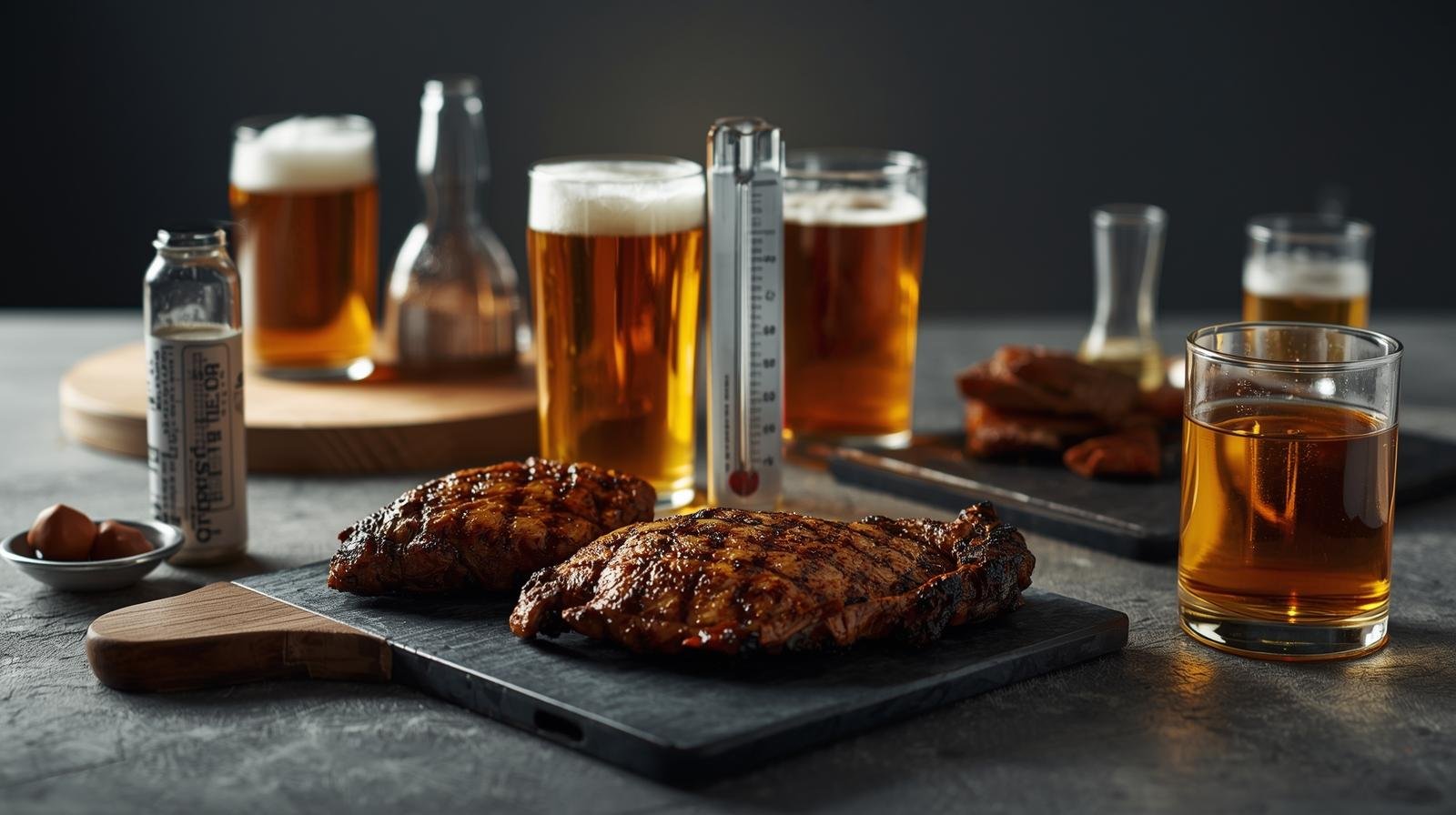
Steak & Porter — Roast Meets Roast
A seared ribeye carries fat and char.
Those browned edges contain deep Maillard compounds — savory, slightly bitter, intensely aromatic.
A robust porter mirrors that roast character.
Roasted barley echoes the crust.
Moderate bitterness trims the fat.
Carbonation refreshes the finish.
Complement first.
Cleanse second.
Dark beer with dark meat isn’t tradition.
It’s chemistry.
BBQ & IPA — Smoke Meets Citrus
Slow-smoked brisket is sweet, fatty, and rich.
Barbecue sauce introduces sugar and spice.
An American IPA brings firm bitterness and bright hop aromatics — citrus, pine, sometimes tropical fruit.
Bitterness prevents sweetness from clinging.
Hop aroma lifts smoke.
Carbonation clears rendered fat.
The pairing works best when IBUs are assertive but not overwhelming.
Too much bitterness amplifies char.
Balance the volume.
Roast Chicken & Saison — Precision and Lift
Roast chicken seems simple.
It isn’t.
There’s crispy skin, tender meat, subtle sweetness, herbs.
A saison — dry, effervescent, lightly peppery — complements without overpowering.
High carbonation scrubs skin oils.
Spicy phenolics echo herbs.
Dry finish prevents heaviness.
The result feels clean.
Not loud.
Burger & Amber Ale — Malt Structure Matters
A classic burger layers fat, salt, toasted bun sweetness, and sometimes caramelized onions.
Amber ales provide caramel malt depth without heavy roast.
Moderate bitterness cuts richness.
Malt sweetness harmonizes with toasted bread.
Medium body matches the burger’s weight.
Intensity alignment first.
Flavor alignment second.
Why These Pairings Work
Each example follows the matrix:
- Fat → Carbonation & bitterness
- Sweet sauce → Hop structure
- Umami crust → Roast character
- Salt → Malt sweetness
There is no guesswork here.
Only pattern.
According to educational guidance from the Brewers Association, pairing success consistently depends on intensity balance and carbonation interplay — especially with protein-heavy dishes.
The science reinforces what experienced brewers already practice.
Meat is bold.
But pairing doesn’t stop at protein.
Texture changes again when fat turns creamy.
Next: cheese.
Cheese & Charcuterie — Texture Meets Carbonation
Cheese changes the tempo.
Fat becomes silk.
Salt sharpens edges.
Fermentation deepens complexity.
Beer thrives in this territory.
Carbonation resets richness.
Malt softens salt.
Bitterness keeps sweetness in check.
Few pairings are as structurally reliable as beer and cheese.
Soft Cheese & Wheat Beer — Lightness and Lift
Brie and camembert are creamy, mildly earthy, slightly mushroom-like.
A wheat beer — hefeweizen or Belgian witbier — brings gentle sweetness, high carbonation, and soft esters.
Bubbles cut cream.
Banana and clove esters complement subtle funk.
Low bitterness keeps harmony intact.
Delicate meets delicate.
Volume aligned.
Blue Cheese & Imperial Stout — Power Meets Power
Blue cheese is salt, mold, fat, and intensity.
An imperial stout offers roast depth, alcohol warmth, and residual sweetness.
Sweetness tempers salt.
Roast mirrors umami.
Alcohol cuts richness.
Intensity must match.
Too light a beer collapses under blue cheese.
Structure sustains structure.
Aged Cheddar & Barleywine — Sweet and Sharp
Aged cheddar sharpens over time.
Crystals form. Umami intensifies. Salt becomes more pronounced.
Barleywine carries high ABV and malt sweetness.
Sweetness balances sharpness.
Alcohol warms.
Bitterness prevents cloying.
The pairing feels layered, almost contemplative.
Slow sip. Small bite.
Salumi & Pilsner — Clean Precision
Cured meats bring salt and fat.
A crisp pilsner provides dryness and carbonation.
Fine bubbles lift oils.
Hop bitterness trims salt.
Light body prevents overload.
It feels effortless.
But the precision is deliberate.
Educational materials from CraftBeer.com frequently highlight carbonation’s central role in cheese pairings, especially with high-fat dairy.
The effect is mechanical.
Bubbles perform maintenance between bites.
Cheese is fermentation.
But global cuisine adds spice, acid, and complexity.
And that’s where pairing becomes more intricate.
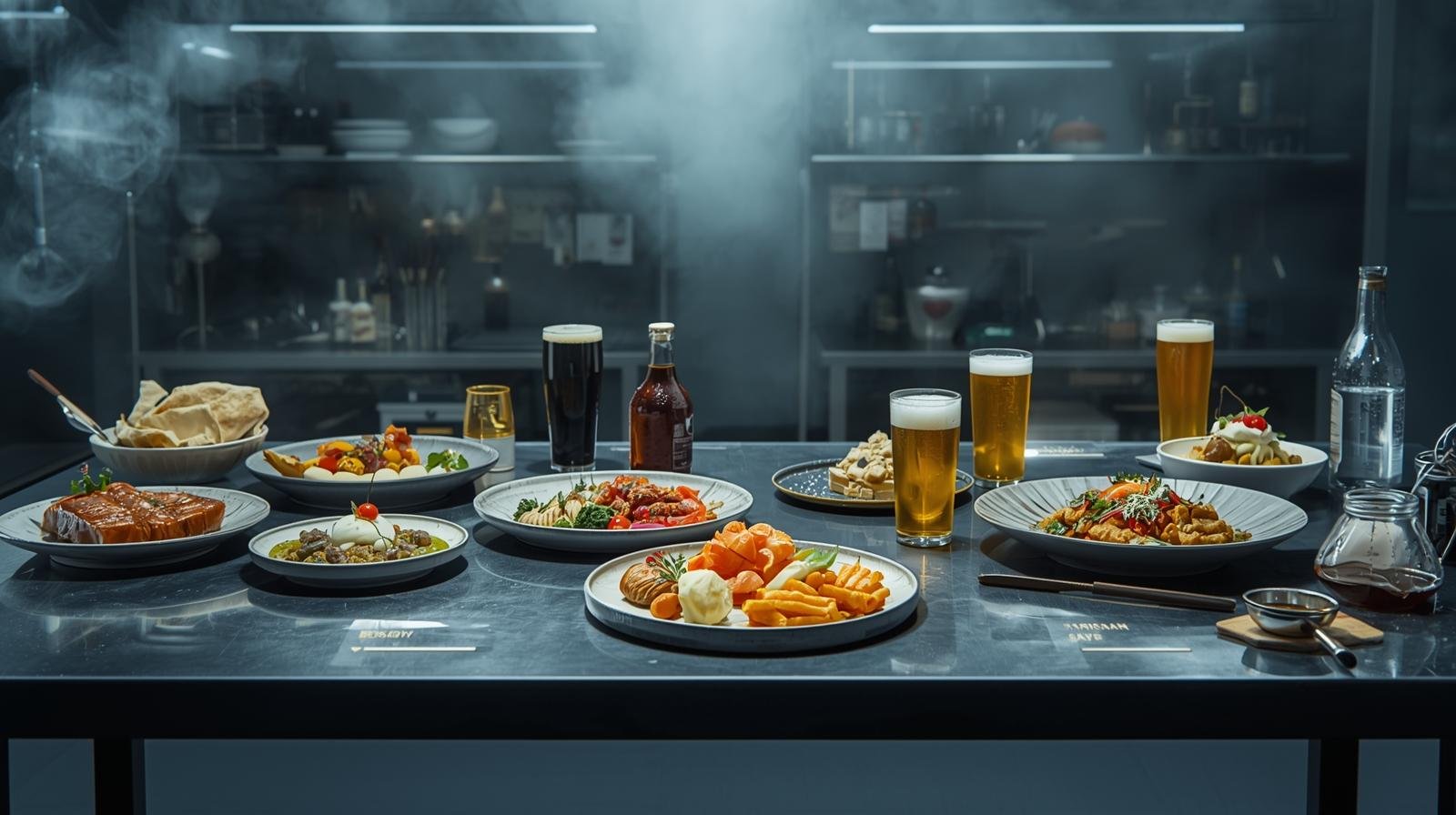
Global Cuisine — Heat, Umami & Fermentation
Global cuisine expands the spectrum.
Heat rises.
Acidity sharpens.
Fermented sauces deepen umami.
This is where beer’s structural diversity becomes indispensable.
Wine often struggles with spice.
Beer adapts.
Because bitterness, sweetness, carbonation, and alcohol can be tuned.
Precisely.
Thai Curry & Hazy IPA — Sweet Heat Control
Thai curry layers coconut milk, chili heat, lemongrass brightness, and palm sugar sweetness.
The dominant signals: heat + sweet + aromatic herbs.
A moderately bitter Hazy IPA works when hop fruit character leans tropical.
Residual sweetness cushions spice.
Soft bitterness prevents sugar overload.
Juicy esters echo lemongrass and lime.
But bitterness must remain moderate.
High IBUs amplify capsaicin.
Heat and bitterness stack quickly.
Sushi & Japanese Rice Lager — Clean Lines
Sushi is subtle.
Rice sweetness.
Clean fish.
Soy sauce salinity.
Wasabi heat.
A dry Japanese rice lager provides high carbonation and a restrained malt profile.
Carbonation refreshes palate.
Light bitterness trims soy salt.
Low ester profile preserves delicacy.
The pairing feels transparent.
Nothing obscured.
Tacos al Pastor & Vienna Lager — Malt Precision
Tacos al pastor balance marinated pork, pineapple sweetness, chili spice, and acidity.
The dominant drivers: sweet + heat + umami.
Vienna lager offers gentle malt sweetness and balanced bitterness.
Malt complements caramelized pork.
Moderate bitterness handles spice.
Medium body supports texture.
Not overpowering.
Structured.
Indian Curry & Belgian Dubbel — Depth Meets Depth
Indian curries vary widely.
But many feature layered spice, tomato acidity, and richness from cream or ghee.
Belgian dubbel carries dark fruit esters, moderate sweetness, and warming alcohol.
Sweetness tempers spice.
Dark fruit notes complement tomato depth.
Carbonation keeps weight manageable.
Intensity alignment remains critical.
Bold curry requires structured beer.
Korean BBQ & Rauchbier — Smoke in Stereo
Korean BBQ delivers marinated beef, sweetness, garlic, sesame, and char.
Rauchbier introduces smoke directly into the beer through malt drying techniques.
Smoke meets smoke.
Malt sweetness balances marinade.
Carbonation resets fat.
This is complement taken literally.
When done correctly, the pairing feels immersive.
Almost architectural.
Why Spice Changes Everything
Capsaicin binds to pain receptors, not taste buds.
Bitterness amplifies that sensation.
Alcohol can intensify it.
Residual sweetness softens it.
This is why lower bitterness and some malt sweetness are often safer with spicy food.
These principles are consistently reflected in pairing guidance from the Brewers Association and educational content from CraftBeer.com.
The science remains constant.
Application varies by cuisine.
Global cuisine expands complexity.
But vegetables bring a different challenge.
Less fat.
More earth.
More green.
Next: the plant spectrum.
Vegetarian & Vegan Pairings — The Green Spectrum
Vegetarian dishes shift the center of gravity.
Less animal fat.
More plant bitterness.
More earth and acid.
Pairing here demands restraint.
Overpowering structure collapses nuance.
Grilled Vegetables & Saison — Dry Precision
Charred zucchini, peppers, eggplant.
Smoke meets vegetal sweetness.
A dry saison offers peppery phenolics and lively carbonation.
Spice echoes herbs.
Effervescence lifts char oils.
Dry finish keeps the palate sharp.
Green flavors remain visible.
Not buried.
Mushroom Risotto & Brown Ale — Earth Meets Malt
Mushrooms deliver umami and damp earth depth.
Creamy risotto adds fat and starch.
A brown ale provides nutty malt character and moderate bitterness.
Malt mirrors earthiness.
Bitterness trims cream.
Medium body supports texture.
Complement first.
Cleanse second.
Plant-Based Burgers & IPA — Structure Required
Modern plant-based burgers often rely on protein blends and umami enhancers.
They are savory, salty, and sometimes sweet.
An American IPA works when bitterness is controlled.
Bitterness cuts fat substitutes.
Hop aroma brightens umami.
Carbonation resets texture.
Intensity alignment remains essential.
A double IPA may overpower.
Moderation matters.
Falafel & Pale Ale — Spice and Lift
Falafel combines chickpea richness, cumin, coriander, and garlic.
Tahini sauce adds fat.
A balanced pale ale offers citrus hop notes and moderate bitterness.
Citrus lifts spice.
Carbonation trims tahini.
Malt supports chickpea earthiness.
The pairing feels agile.
Not heavy.
Vegetarian pairing reinforces a core truth:
Fat is not required for complexity.
Structure is.
The same matrix applies.
Variables simply shift.
Dessert Pairings — Sweet Meets Structure
Dessert pairing demands caution.
Sweetness on both sides can overwhelm.
Balance becomes surgical.
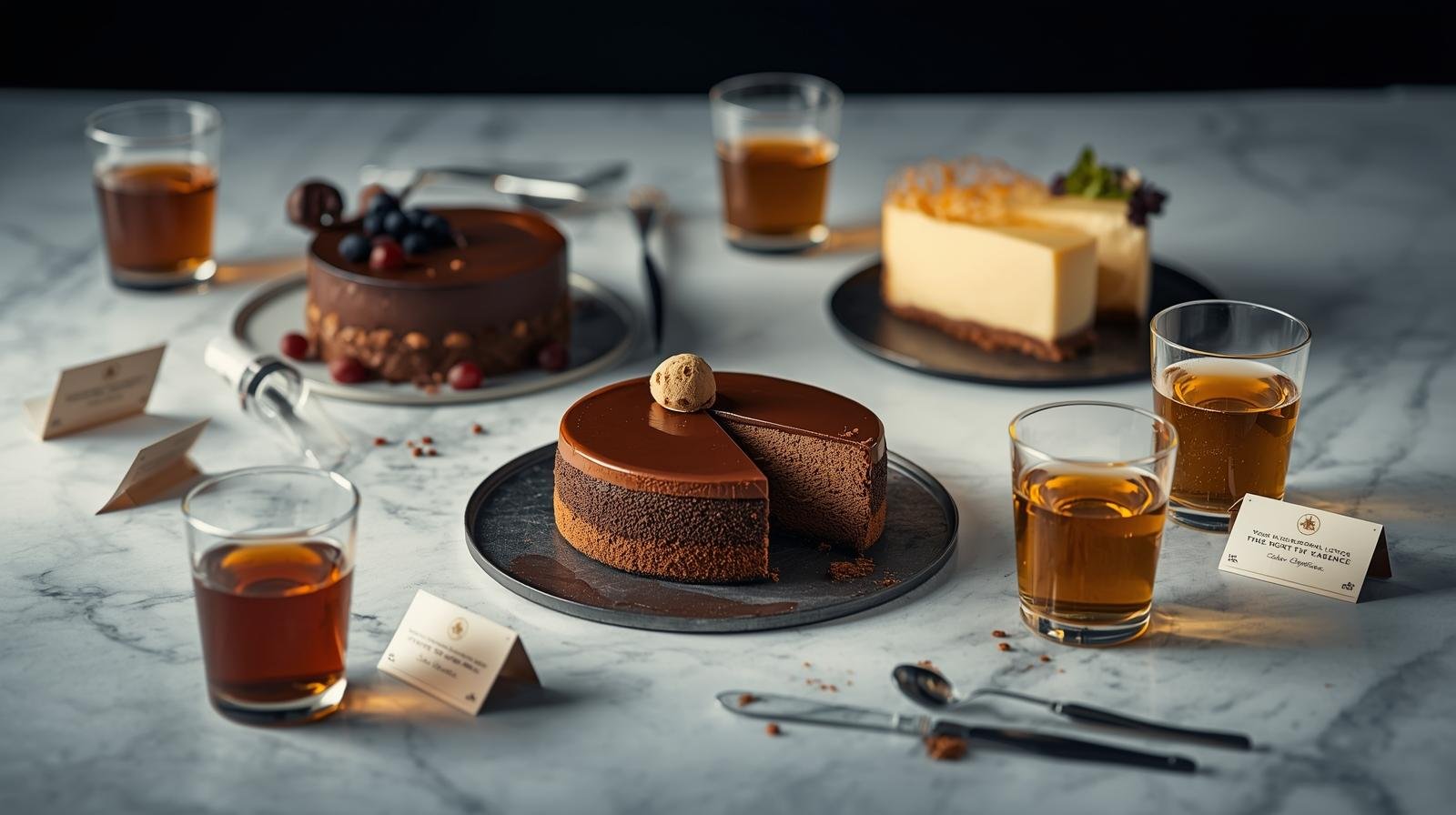
Chocolate Cake & Stout — Echo and Depth
Dark chocolate carries bitterness and roasted notes.
A stout with roasted barley mirrors cocoa tones.
Roast complements roast.
Moderate sweetness prevents dryness.
Carbonation lightens density.
Too sweet a stout becomes cloying.
Dryer versions often perform better.
Cheesecake & Fruit Lambic — Acid as Counterpoint
Cheesecake is creamy and sweet.
Fruit lambic introduces acidity and fruit brightness.
Acid cuts richness.
Fruit complements sweetness.
Effervescence refreshes.
The pairing feels vibrant.
Not heavy.
Caramel Desserts & Doppelbock — Malt Resonance
Caramel custard or flan leans sweet and dense.
Doppelbock provides deep malt sweetness and warming alcohol.
Malt echoes caramelization.
Alcohol prevents stagnation.
Bitterness remains restrained.
Intensity alignment is crucial.
Ice Cream & Barrel-Aged Beer — Temperature Contrast
Cold dairy and high-ABV barrel-aged beer create temperature interplay.
Oak introduces vanilla and spice.
Sweetness must be balanced carefully.
Small pours.
Small bites.
Precision over excess.
Dessert pairing rewards discipline.
Sweetness should never double unchecked.
Bitterness, roast, and acid are tools.
Use them.
Common Beer & Food Pairing Mistakes
Even the best matrix fails when structure is ignored.
1. Intensity Mismatch
Light beer with heavy food.
Or vice versa.
Volume must align first.
2. Bitterness + Heat Overload
High IBU with spicy food amplifies burn.
Lower bitterness is safer.
3. Sweetness Stacking
Sweet dessert with sweet beer creates fatigue.
Introduce roast or acid instead.
4. Ignoring Carbonation
Flat structure equals heavy palate.
CO₂ is a functional tool, not decoration.
Pairing fails rarely because flavors “don’t match.”
It fails because structure wasn’t respected.
Quick Reference Beer & Food Pairing Table
For effective beer & food pairing, match intensity first, then use carbonation, bitterness, sweetness, or roast to balance fat, salt, heat, and sweetness in the dish.
| Dish Type | Recommended Beer Style | Structural Reason |
|---|---|---|
| Steak | Porter / Stout | Roast + bitterness cut fat |
| Fried Food | IPA / Pilsner | Carbonation + bitterness cleanse |
| Spicy Curry | Hazy IPA / Dubbel | Sweetness softens heat |
| Sushi | Rice Lager | Light body preserves delicacy |
| Blue Cheese | Imperial Stout | Sweet + alcohol balance salt |
| Chocolate Dessert | Stout | Roast complements cocoa |
| Grilled Vegetables | Saison | Dry + effervescent structure |
| Burger | Amber Ale | Malt matches toasted bread |
This table simplifies the matrix.
But the principles remain constant.
The Future of Beer & Food Pairing
Pairing culture is becoming more analytical.
Breweries increasingly publish detailed sensory notes.
Restaurants describe beer styles alongside dishes.
Tasting education programs are more visible.
Industry data and educational reports from the Brewers Association show continued interest in independent beer styles and consumer education.
What’s evolving isn’t the palate.
It’s awareness.
Data doesn’t replace intuition.
It sharpens it.
In beer, structure is becoming visible.
And visible structure leads to better tables.
The BeerMadness Signal
The matrix isn’t about rules.
It’s about resonance.
Beer & food pairing in 2026 feels less accidental, more intentional.
Less guesswork, more calibration.
Fat meets carbonation.
Sweetness meets bitterness.
Smoke meets roast.
Patterns repeat because physiology repeats.
But the experience remains human.
A glass fogs under clean white light.
A plate rests beside it.
Part brewery.
Part lab.
Fully alive.
Pairing isn’t prediction.
It’s alignment.
And when alignment clicks, flavor doesn’t just match.
It glows.
Beer & Food Pairing FAQ — 2026 Guide
What is beer & food pairing?
Beer & food pairing is the practice of matching beer styles with dishes based on flavor intensity, carbonation, bitterness, sweetness, and aroma to enhance both the food and the beer. Effective pairing balances structure first, then flavor.
Why is beer better than wine for some food pairings?
Beer often performs better than wine because it offers carbonation, wider bitterness ranges, and diverse malt sweetness levels. Carbonation helps cleanse the palate, while bitterness and roast create structural flexibility across spicy, fatty, and salty foods.
What beer pairs best with steak?
Porter or stout pairs well with steak because roasted malt flavors complement charred crust, while moderate bitterness and carbonation cut through fat. Intensity alignment is key — bold meat requires structured beer.
What beer goes with spicy food?
Beers with moderate bitterness and some residual sweetness work best with spicy food. Styles like Hazy IPA, Belgian dubbel, or wheat beer can soften heat, while high bitterness may intensify capsaicin burn.
How do you pair beer with cheese?
Match cheese intensity to beer structure. Soft cheeses pair well with wheat beers, while strong cheeses like blue cheese match imperial stout. Carbonation helps cleanse fat, and malt sweetness balances salt.
What beer pairs with dessert?
Roasty stouts pair with chocolate desserts, while fruit-forward lambics complement creamy desserts like cheesecake. Avoid stacking excessive sweetness — balance with roast, bitterness, or acidity.
What is the most important rule in beer & food pairing?
The most important rule is to match intensity first. Light dishes require lighter beers, while rich or bold dishes need structured styles. Once intensity aligns, adjust bitterness, sweetness, or carbonation for balance.
How does carbonation affect beer & food pairing?
Carbonation cleanses the palate by lifting fats and reducing heaviness between bites. This makes beer especially effective with fried foods, creamy dishes, and cheese.