There’s a quiet revolution happening in Britain’s pint glasses. Beneath the haze of hop-heavy IPAs and crisp lagers, the stout has reclaimed its throne. Not as the heavy, one-note pour of winter evenings past—but as a spectrum of innovation, where AI-driven brewing systems, nitro infusion tech, and barrel aging algorithms redefine what “dark” can taste like.
Across the UK, breweries are merging tradition with circuitry. Yorkshire fermenters run small-batch stouts through real-time fermentation analytics; London taprooms experiment with nitrogen micro-bubbles to achieve precision foam density; Edinburgh innovators train sensory algorithms to detect “sweet spot roast levels.” The result? Beers that glow with complexity—espresso, cocoa, molasses—wrapped in a velvet pour that feels more like liquid architecture than drink.
This is the BeerMadness 2026 stout renaissance—a celebration of ten remarkable brews that capture where British dark beer is heading next. From heritage legends like Guinness Draught and Mackeson Stout, to new-wave challengers like Caffrey’s Black Stout and London Black, this list isn’t just a ranking; it’s a map of flavor evolution.
So, dim the lights, lift the glass, and taste the data. These are the Top 10 Stout Beers in the UK (2026)—where roasted malt meets modern code.
Why Stout Is the Beer of 2026
In 2026, the UK beer landscape is darker—in the best way possible. Sales data from the Brewers Association of Great Britain show a 23 % rise in craft stout production compared to 2023, driven by microbreweries reinventing what “dark beer” means. The shift isn’t nostalgia—it’s curiosity.
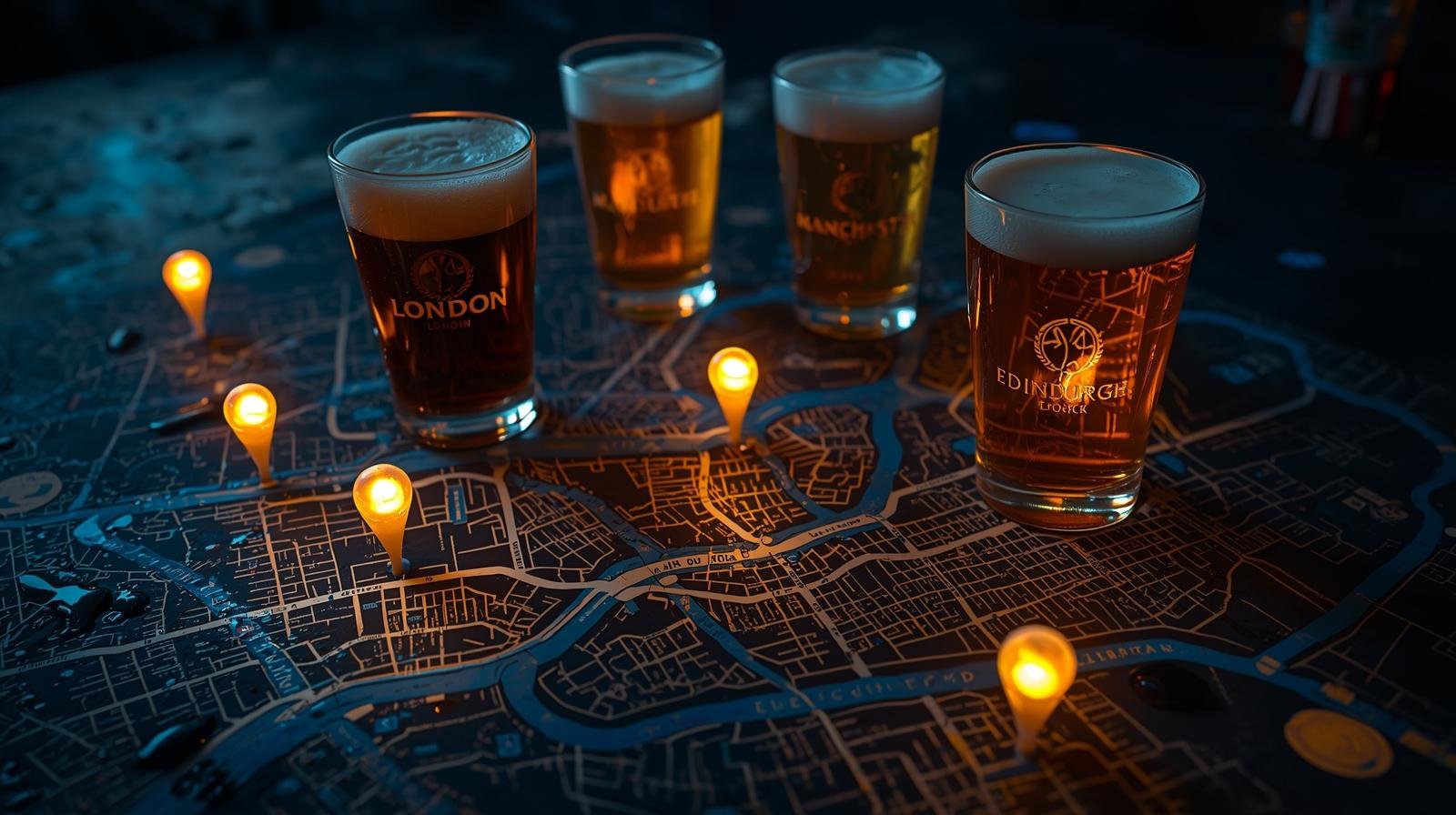
For years, British taprooms were dominated by IPA experimentation. But saturation came quickly, and the drinker’s eye wandered. The counter-movement brewed in the shadows: stouts and porters with layered depth, subtle sweetness, and low-ABV sophistication. According to research from the Brewers Association and brewing science programs such as those at Heriot-Watt University and UC Davis, breweries are increasingly using data analytics and sensory panels to fine-tune flavor balance, fermentation profiles, and consistency — especially in dark beers like stout.
Modern stouts are no longer confined to the imperial stereotype. Breweries like Titanic, Anspach & Hobday, and Beavertown have adopted nitro-infusion systems, achieving a creamier, lighter pour that rivals any lager in approachability. Simultaneously, AI fermentation analytics allow for microscopic control of roast intensity and sweetness balance—tech once reserved for wine.
Digital beer culture has also played a role in stout’s resurgence. Breweries and pubs increasingly use short-form video platforms and social media to showcase nitro pours, food pairings, and brewing processes—formats that emphasize texture, ritual, and sensory detail. These visuals have helped reposition stout as both approachable and contemporary for a new generation of drinkers.
In 2026, stout isn’t a seasonal niche—it’s the statement drink of the year.
THE TOP 10 STOUT BEERS IN THE UK (2026)
2026 is a golden year for the dark pour. The lineup below bridges heritage and high-tech: iconic recipes reinterpreted with new brewing intelligence, local pride, and a splash of bold experimentation.
1. Guinness Draught — The Original Nitro Classic
Guinness Draught remains the gravitational center of the stout universe. Brewed at St. James’s Gate since 1759, it continues to define what millions of drinkers expect from a dark pint—yet its relevance in 2026 is anything but nostalgic.
The modern Guinness pour is a feat of controlled engineering. Updated nitro dispense systems now regulate bubble size and foam density with remarkable precision, ensuring consistency across pubs in the UK. The famous cascade isn’t just visual theater—it’s fluid dynamics at work, creating that signature creamy mouthfeel without adding sweetness.
On the palate, Guinness offers roasted barley bitterness, subtle cocoa powder, and a dry, mineral finish. At just 4.2% ABV, it’s deceptively light, making it endlessly sessionable while still delivering depth. Its restrained profile allows the drinker to focus on texture and balance rather than intensity.
Food pairings remain classic for a reason. Oysters, beef stew, and sharp cheddar all benefit from Guinness’s ability to cleanse the palate while amplifying umami. In 2026, Guinness isn’t just the benchmark—it’s the reference signal against which all nitro stouts are measured.
2. Caffrey’s Black Stout — The Challenger Reborn
Caffrey’s return to the stout category marks one of the most intriguing revivals in recent UK beer history. Long associated with smooth Irish ales, the brand’s 2026 Black Stout reintroduces itself with a modern nitro-forward identity aimed squarely at contemporary pub culture.
Visually, the beer pours jet black with a dense, ivory head that settles into a velvety cap. Aromatically, it leans toward espresso crema, toasted grain, and a hint of burnt sugar. The flavor follows through with balanced roast bitterness and a subtle sweetness that softens the edges without drifting into milk stout territory.
At approximately 4.5% ABV, Caffrey’s Black Stout is engineered for approachability. It bridges the gap between Guinness’s dryness and sweeter modern craft stouts, making it a strong candidate for drinkers exploring beyond their usual dark pint.
What makes this beer significant in 2026 is symbolic as much as sensory. Its success confirms the UK nitro stout revival—proof that heritage brands can re-enter the conversation by respecting tradition while embracing modern dispense technology.
3. St Peter’s Cream Stout — Award-Winning English Elegance
St Peter’s Cream Stout is a masterclass in balance. Brewed in Suffolk and packaged in the brewery’s iconic oval bottles, it represents English stout at its most refined and composed.
This beer pours opaque black with a mocha-toned head, immediately releasing aromas of milk chocolate, caramel, and lightly roasted malt. The inclusion of lactose lends a smooth, rounded mouthfeel that supports the roast character rather than overwhelming it. Each sip unfolds gradually—sweetness first, followed by gentle bitterness, then a soft, lingering finish.
At 6.5% ABV, St Peter’s Cream Stout carries more weight than session stouts but avoids the heaviness of imperial examples. It’s rich without being tiring, indulgent without becoming cloying. That balance has earned it multiple international awards and a loyal following among stout drinkers seeking elegance over extremes.
Paired with desserts, blue cheese, or even roasted meats, this stout adapts effortlessly. In a market crowded with experimental releases, St Peter’s proves that precision and restraint still win respect in 2026.
4. Mackeson Stout — Britain’s Heritage in a Glass
First brewed in 1907, Mackeson Stout is living proof that milk stout isn’t a modern invention—it’s a British tradition. In 2026, Mackeson remains one of the most accessible sweet stouts on the UK market, valued for its low ABV and comforting profile.
The beer pours dark brown to black with a soft tan head. Aromas lean toward chocolate milk, toasted bread, and light coffee. On the palate, lactose sweetness takes center stage, smoothing out roast bitterness and delivering a rounded, almost nostalgic drinking experience.
At just 3.0% ABV, Mackeson is designed for easy enjoyment. It’s a stout you can return to pint after pint without fatigue, making it particularly popular in traditional pubs and among drinkers who prefer sweetness over intensity.
While modern brewing now uses digital fermentation monitoring to ensure consistency, Mackeson’s charm lies in its simplicity. It doesn’t chase trends—it preserves a style that still resonates. In 2026, Mackeson stands as a reminder that heritage flavors never truly fade.
5. Titanic Brewery True Stout — Engineered Tradition
Titanic Brewery’s True Stout embodies the meeting point of regional pride and modern brewing control. Brewed in Staffordshire, this stout reflects the brewery’s commitment to traditional English beer while quietly embracing innovation.
True Stout pours deep black with a creamy head, offering aromas of roasted barley, espresso, and dark cocoa. The flavor is firm and roasty but never harsh, with a subtle sweetness rounding out the mid-palate. At 4.5% ABV, it strikes a near-perfect balance between drinkability and depth.
In recent years, Titanic has refined its dispense approach, incorporating nitrogen-enhanced cask systems that elevate mouthfeel without altering the beer’s core identity. The result is a smoother, more consistent pint that still feels unmistakably British.
This stout excels alongside hearty food—meat pies, roast beef, and mature cheeses all benefit from its bitterness and carbonation. In 2026, True Stout represents regional excellence executed with modern precision.
6. London Black (Anspach & Hobday) — The South London Sensation
London Black has rapidly become one of the capital’s most celebrated stouts. Brewed in Bermondsey by Anspach & Hobday, it reflects the new wave of British brewing: locally rooted, sustainability-driven, and quality-obsessed.
The beer pours pitch black with a thick nitro head that rivals the smoothness of any Irish stout. Aromas of roasted coffee and dark chocolate dominate, while the palate remains dry, clean, and highly drinkable. At 4.4% ABV, it’s designed for repeat enjoyment.
What sets London Black apart is its production ethos. Anspach & Hobday emphasizes water efficiency, waste reduction, and modern resource management as part of its brewing process. It’s a stout built not just for flavor, but for the future of urban brewing.
In 2026, London Black isn’t just a great stout—it’s a statement of what modern British craft can achieve without excess.
7. Buxton Brewery Imperial Black — Barrel-Aged Powerhouse
Buxton Brewery’s Imperial Black is aimed squarely at experienced stout drinkers. Sitting in the 8% ABV range, this beer delivers intensity without sacrificing balance.
The aroma opens with dark chocolate, espresso, dried fruit, and subtle oak. On the palate, layers of molasses, burnt sugar, and roasted malt unfold slowly, finishing with a warming alcohol presence that never dominates.
Many batches are barrel-aged, and in 2026 Buxton employs advanced fermentation tracking to maintain consistency across high-gravity brews—no small feat in imperial stout production.
This is a beer for slow evenings and small pours. Best enjoyed from a snifter, Imperial Black demonstrates how power and finesse can coexist in modern UK stout brewing.
8. North Brew Co Oatmeal Stout — Soft AI Precision
North Brew Co’s Oatmeal Stout highlights how texture has become a central focus of modern stout design. Brewed in Leeds, this beer uses oats—not lactose—to achieve a smooth, silky body.
Expect aromas of hazelnut, coffee, and lightly toasted grain. The palate is rounded and creamy, with oats softening roast bitterness and adding subtle sweetness. At 5.2% ABV, it’s flavorful without tipping into heaviness.
Sensor-driven temperature control during mashing ensures optimal oat integration, resulting in a consistent mouthfeel batch after batch. It’s a technical achievement that feels effortless in the glass.
This stout is versatile, comforting, and quietly sophisticated—a perfect example of modern craft subtlety.
9. Durham Brewery Dark Storm — Champion of Balance
Dark Storm has earned its reputation as one of the North East’s finest stouts through sheer balance. Brewed by Durham Brewery, it consistently impresses judges and drinkers alike.
The beer pours dark with ruby highlights, offering aromas of roasted malt and bittersweet chocolate. The flavor balances roast, sweetness, and bitterness with remarkable precision, finishing clean and dry.
At 5.0% ABV, Dark Storm sits comfortably between session and strength. It’s equally at home in competition and at the pub, proving that refinement doesn’t require extremes.
In 2026, Dark Storm remains a benchmark for classic British stout balance.
10. Cloudwater Pastry Experiment 2026 — Dessert in 4D
Cloudwater’s Pastry Experiment series represents the cutting edge of stout innovation. The 2026 release pushes dessert-inspired brewing into new territory using AI-assisted flavor modeling.
This imperial pastry stout layers cocoa nibs, marshmallow, vanilla, and roasted coffee into a cohesive whole. Despite its 9% ABV, the beer avoids chaos through careful sweetness control and roast calibration.
Each batch is informed by sensory feedback loops, aligning human tasting panels with algorithmic predictions. The result is indulgent but precise—a dessert stout that feels intentional rather than excessive.
As a closing note to the list, Cloudwater’s Pastry Experiment signals where stout innovation is heading: bold flavors guided by data, not guesswork.
How to Pair These Stouts with Food & Mood
The right stout doesn’t just complement food — it composes it. Think of roasted malt as a melody and bitterness as its bassline; every pairing is a remix of heat, sweetness, and texture.
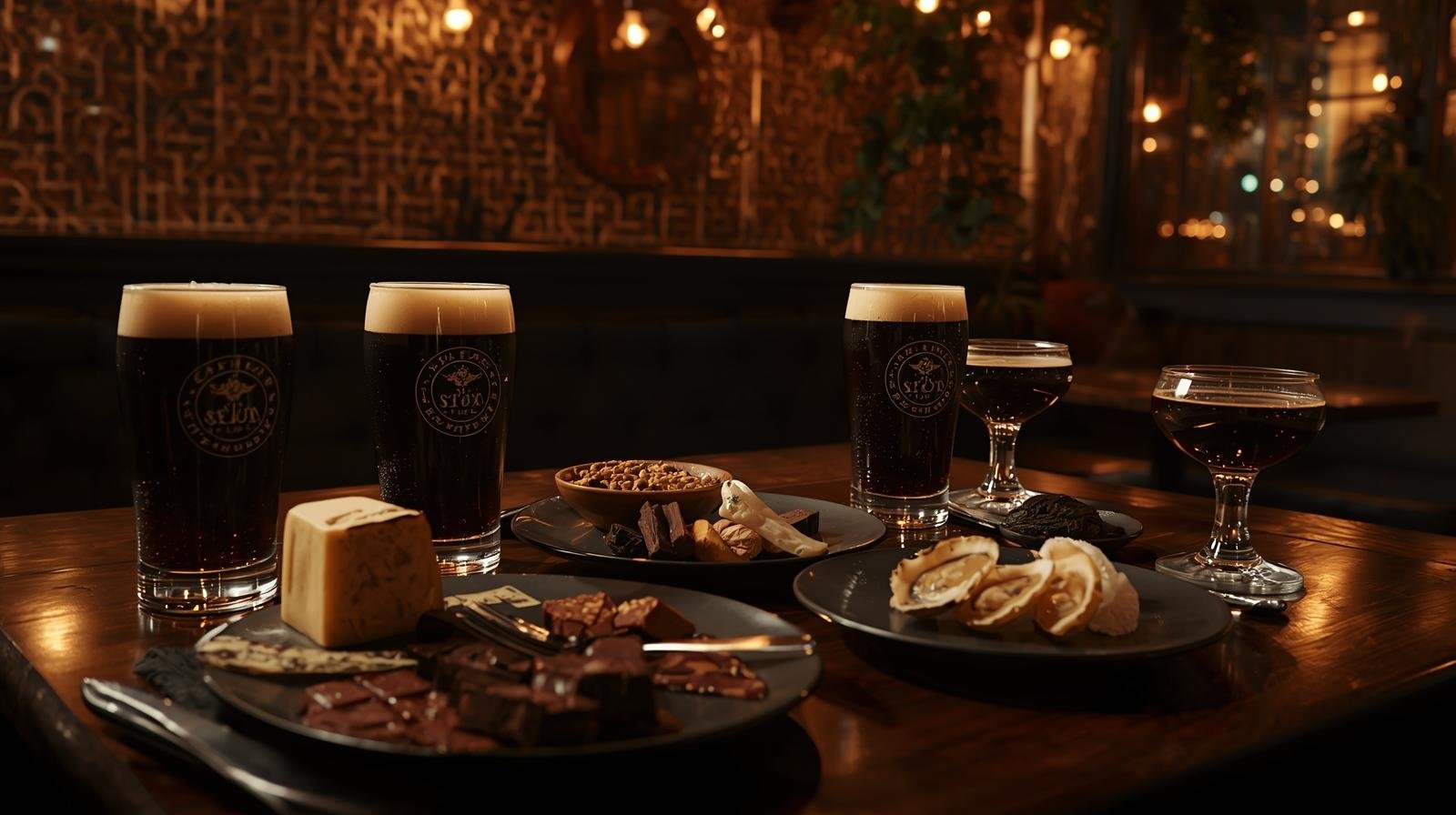
In 2026, UK breweries and chefs are rediscovering how stout can transform dining. In 2026, stout pairing has moved beyond intuition alone. Chefs and brewers increasingly collaborate using sensory analysis and flavor-mapping techniques to understand how roasted malt compounds interact with umami-rich foods like oysters, grilled meats, and aged cheeses. The result is more deliberate, structured pairing experiences that elevate both beer and dish.
Here’s the BeerMadness pairing matrix:
| Food Type | Recommended Stout | Flavor Interaction |
|---|---|---|
| Aged Cheddar / Blue Cheese | Mackeson Stout | Sweet lactose softens sharp saltiness |
| Oysters / Shellfish | Guinness Draught | Nitro creaminess contrasts brine |
| Beef Pie / Stew | Titanic True Stout | Roasted bitterness amplifies umami |
| Chocolate Dessert / Tiramisu | Thornbridge Cocoa Wonderland | Cocoa echo and sweet balance |
| BBQ or Smoked Meats | Beavertown Smog Rocket | Smoke on smoke — a layered duet |
Serving Tips 2026 Edition
- Temperature: Dry stouts at 8 °C (46 °F); imperials around 13 °C (55 °F). Below that, you mute the flavor data.
- Glassware: Use a tulip glass for aroma capture — its shape amplifies volatile esters and roasted notes.
- Nitro Pour Timing: Let a nitro stout rest for exactly 90 seconds post-pour to stabilize the bubble matrix.
Beer pairing isn’t just culinary science; it’s emotional engineering — balancing comfort and contrast in every sip.
Dry, Sweet, Nitro & Imperial — What Makes Them Different
In 2026, stout is no longer a single style — it’s a spectrum of texture, flavor, and tech-inflected craft. Understanding the four main variants helps you read the beer like code: every ingredient a line of syntax that compiles into flavor.
Dry Stout — The Classic Algorithm
Born in Ireland and refined in London, the dry stout is minimalist perfection. Low in sweetness and high in roast, it delivers clean bitterness and a crisp finish. Guinness remains the template, but modern versions like London Black add micro-nitro softness for balance.
Profile: 4–5 % ABV | Roasted coffee, burnt toast | Clean aftertaste
Pair with: Oysters or blue cheese
Sweet / Milk Stout — The Comfort Protocol
Add lactose and you soften edges. Sweet stouts (also called milk stouts) use non-fermentable milk sugars to create silky, dessert-like body. 2026 versions — such as BrewDog Jet Black Heart Nitro — feature AI-calculated sugar-to-roast ratios for predictable sweetness without cloying aftertaste.
Profile: 4–6 % ABV | Chocolate milk, toffee | Soft, creamy texture
Pair with: Chocolate desserts or salted caramel treats
Nitro Stout — The Texture Revolution
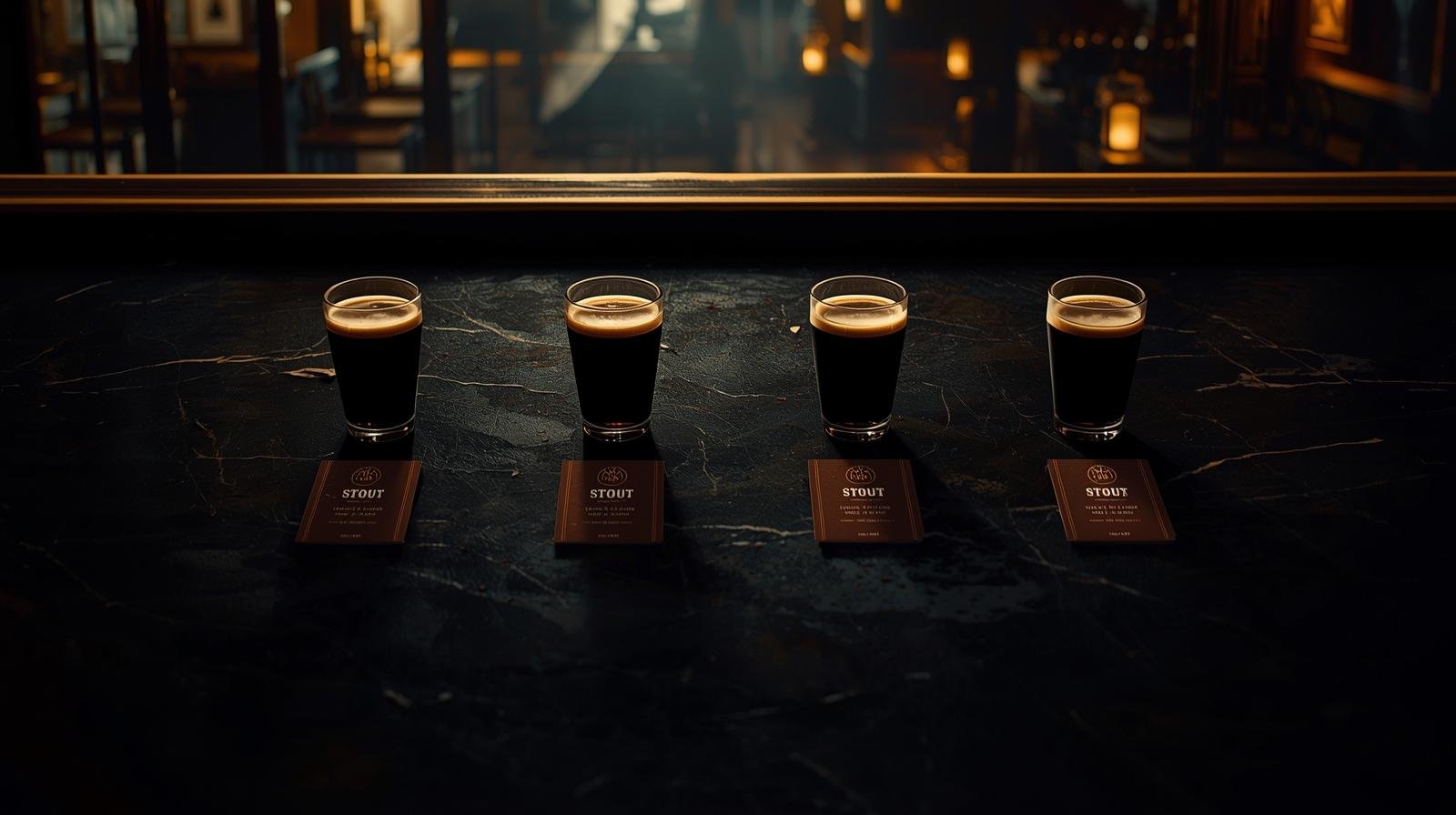
Nitrogen changes everything. Replacing carbon dioxide with nitrogen creates tiny bubbles that form that signature creamy head and velvet mouthfeel. Once the domain of Guinness, now embraced by Titanic True Stout, London Black, and even Caffrey’s new release, the nitro trend is a textural renaissance.
Profile: 4–5 % ABV | Soft bitterness, light sweet cream finish | Silky pour
Pair with: Steak frites or creamy soups
Imperial Stout — The Power Format
Bigger, bolder, and boozier. Imperial stouts push 8–15 % ABV, layering chocolate, oak, vanilla, and whisky warmth. Brewers like Buxton and Cloudwater use data-driven barrel aging to track oxidation curves for precision maturation — flavor as time-coded art.
Profile: 8–12 % ABV | Molasses, bourbon, espresso | Intense and warming
Pair with: Dark chocolate cake or aged Gouda
Where to Find the UK’s Best Stouts in 2026
To taste the UK’s dark side properly, you’ve got to travel where the foam lives — from heritage cellars to modern taprooms glowing like data centers.
London — The Nitro Capital
Head south to Bermondsey, where Anspach & Hobday’s London Black flows from sleek stainless tanks into pint glasses with pixel-perfect nitro foam. Nearby, the Craft Beer Co. and The Kernel Brewery pour limited stout collabs that change faster than a blockchain ledger. Even legacy pubs like The George Inn now serve smart-tap Guinness with micro-sensor calibration.
Yorkshire & the Midlands — Tradition in Motion
In Tadcaster, Samuel Smith’s offers living history in stone-fermented vats, while Buxton Brewery’s Imperial Black continues to dominate the Peak District’s tap rotations. Titanic Brewery in Stoke-on-Trent runs tours that blend brewing nostalgia with modern nitrogen demos.

Scotland & Beyond — Barrel Frontiers
Head north for BrewDog’s Ellon HQ, where stout innovation meets AI fermentation displays, and venture west for independent whisky-barrel collaborations that blur beer and spirit craftsmanship.
Digital Discovery — The New Pub Crawl
Even if you’re not hopping trains, the UK’s stout scene is now mapped digitally. Apps like Untappd let you track new releases, geo-tag brewery tours, and sync your palate preferences across platforms.
THE BEERMADNESS SIGNAL
Every pint tells a story, but the stout tells data and desire in equal measure. In 2026, the UK’s brewing culture has fused centuries of craft with circuits of innovation — the result is a signal echoing through pubs, labs, and digital streams alike.
From Dublin’s cascading nitrogen to Derbyshire’s barrel programs, the new generation of brewers speaks both yeast and code. They’re not just crafting flavor; they’re engineering experience — sensory patterns you can almost hear fizzing under foam.
What makes the stout special today isn’t just its darkness. It’s its dimension. Each pour reveals the tension between comfort and curiosity — the creamy nostalgia of Mackeson meeting the algorithmic precision of Cloudwater. Every sip is heritage rewritten in binary malt and roasted poetry.
And here’s the truth that BeerMadness has tracked since its first pour: the dark isn’t old — it’s evolving.
If you follow the aroma of roasted malt and the hum of innovation, you’ll find the heart of Britain’s brewing identity — steady, glowing, and unmistakably alive.
Raise your glass, tune your senses, and listen: that deep, foamy frequency rising from the bar?
That’s The BeerMadness Signal.
Frequently Asked Questions About UK Stouts (2026)
What’s the most popular stout in the UK right now?
Without question, Guinness Draught still leads the pack. Guinness continues to refine its nitrogen dispense technology, focusing on consistency, bubble size, and foam stability across pubs.
Which UK stout is best for beginners?
Try Caffrey’s Black Stout — its soft nitro texture and balanced sweetness make it highly approachable without overwhelming bitterness.
Are nitro stouts stronger than regular ones?
Not necessarily. Nitro stouts focus on texture over strength. Most hover around 4–5 % ABV, but their creamy feel makes them seem fuller-bodied.
Can stouts be aged like wine?
Yes — especially imperial and barrel-aged stouts. Over months, they develop deeper cocoa, vanilla, and oak complexity. Cloudwater’s Pastry Experiment series is designed precisely for aging.
What’s the key difference between porter and stout?
Historically, stout was the “stronger” porter. Today, porters lean toward chocolate and caramel, while stouts push roast and bitterness — think espresso versus mocha.
How should I serve a stout for the best pour?
For nitro stouts, pour hard into a tulip glass, then rest 90 seconds to stabilize the foam. Imperials should be served slightly warmer (around 13 °C / 55 °F) to unlock aroma layers.
Are there alcohol-free or low-ABV stouts worth trying?
Absolutely. Big Drop Galactic Milk Stout continues to impress, offering dark-chocolate depth at just 0.5 % ABV — a 2026 favorite among mindful drinkers.